
How Dan Schrecker and Jonathan Levine brought the undead to life in Warm Bodies.

It has been just over a month since a zombie named R staggered into movie theatres and scared up a sizable take of box office receipts. Anyone who thought Warm Bodies – the rom-com with the brain-munching leading man – would die a quick death was definitely proven wrong. For director Jonathan Levine, however, the success of the project was anything but a certainty. Better known for dramatic fare like 2008’s The Wackness and 2011’s 50/50, the thirty-six-year-old is the first to admit he took a bit of a leap when deciding to helm a feature requiring serious special effects, but it was a leap that definitely paid off.
“One of the reasons I did this movie was to be able to work on a slightly bigger palette and be able to learn,” he shares. “I really think it’s important to grow as a filmmaker and for me, understanding visual effects is part of that. The movies I grew up loving – Raiders of the Lost Ark, The Goonies and Back to the Future – all had tons of visual effects. That being said, I also loved the idea of using effects in a context that wasn’t a big noisy summer movie, but actually a heartfelt story and a character-driven story.”
To stack the deck in his favor, he turned to Dan Schrecker of LOOK Effects, whose work on 2010’s Black Swan earned him a BAFTA nomination for Best Visual Effects. “I wanted to bring someone on as early as possible, just because I felt like I really didn’t know what the hell I was doing,” Levine remembers with a laugh. “I had been a fan of Dan’s and I really loved what those guys had done with Darren Aronofsky, especially on The Fountain. I find that very often when I watch one of these completely immersive CG movies I just tune out because I don’t believe it. It feels very flat and very fake to me, so I didn’t want that and I thought that Dan did a really nice job of integrating visual effects into an organic execution.” As luck would have it, the duo also had a lot in common. “We’re both Knicks fans and we’re both from New York, so we really got along well and he came on as not only the supervisor but also someone who was very much helping guide me through the learning curve.”
From March 2011 through till September 2012, the collaborators manoeuvred their way through the project, which was filmed in Montreal, Quebec. “It really came down to Pittsburg versus Montreal,” Levine explains, “and I had spent a lot of time in Montreal when I was younger and really fallen in love with the city, so maybe it was just my selfish desire to have better meals.” Transforming the metropolis into “Any City, North America”, however, required digitally uprooting its famed Olympic Stadium and shuffling it closer to the skyscrapers of centre-ville. As Schrecker explains, “it was important that the establishing shots of the wall and the city were downtown, and it was important to sell the geography of this world, so we moved the stadium.” Not that it was a simple matter of cut-and-paste, of course. “Instead of building an entirely digital world, you’re painting out what’s really there and creating digital buildings. You take out this building and replacing it with that one.”
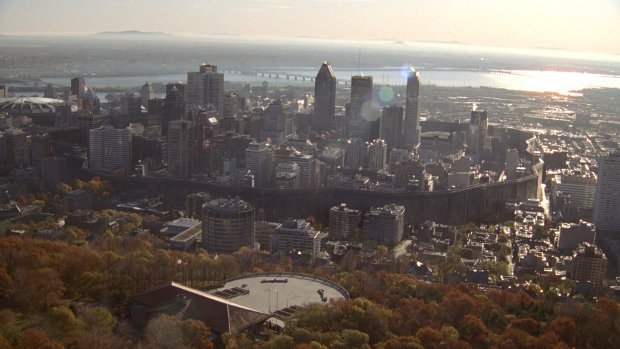
“I’m not sure if we went far enough there, because it’s very clearly Montreal,” he concedes. “I’ve shot in Montreal before, and we’ve made it look a little bit more like Philadelphia, which is one of the model ‘generic’ cities, no offense to Philly.” Levine agrees, “People from Montreal will definitely not be fooled,” but adds “the movie has a kind of tension between a grounded reality and a fairy tale, so we wanted to err on the side of ‘this is something that could happen anywhere.’”
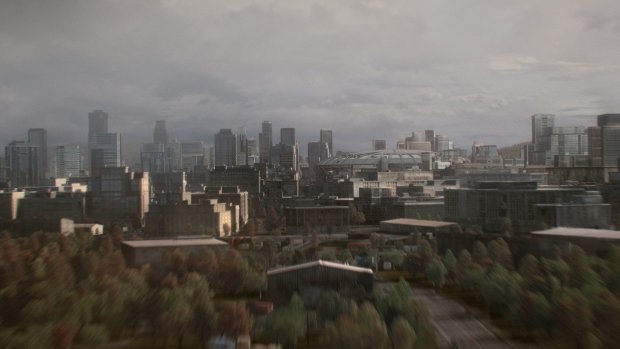
To realize that concept and immerse the viewer in a world shaped by the human/zombie conflict, a helicopter shot was created by joining two live action plates with roughly fifteen blocks of computer-generated buildings between them. “It’s probably the most expensive shot in the film,” Levine states. Given the work Schrecker’s team put into it, it’s easy to see why. “There were three parts to it. There were both transitions for getting in and out of each of the live action plates, and then the main work is building that city. There was a massive team of artists modeling, and texturing and lighting and going through and building all that stuff. It definitely takes a lot of people and a lot of time.” Levine sees it as money well spent. “It’s always nice I think when you can do something like that so that the audience can see they’re in good hands, and that the movie has scope.”
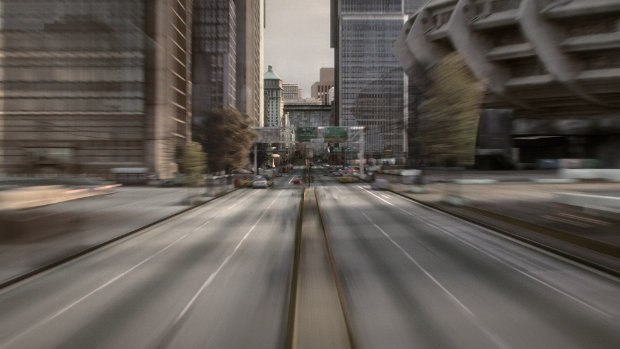
On-set, one particular idea regarding a shift in time created a bit of a challenge from a technical side. “We have this shot at the beginning of the movie where R is walking through an airport, and we spin around him and go into the airport in the past and it’s filled with people. I had that idea pretty late,” Levine admits, “but to Dan’s credit, he figured out a quick and easy way for us to do it.”
“We came up with a solution that was very practical,” Schrecker explains, “and we were able to minimize our footprint and get through it as quickly as we could. Basically, if you were going to do that shot the quote unquote ‘proper way’, you would have a motion control rig that could do a repeatable move, because what you’re doing is one move in the dead world, and one move in the living world.” By virtue of the fact that the set would have to be redressed over the course of a week, however, time forced the team to find a better solution.
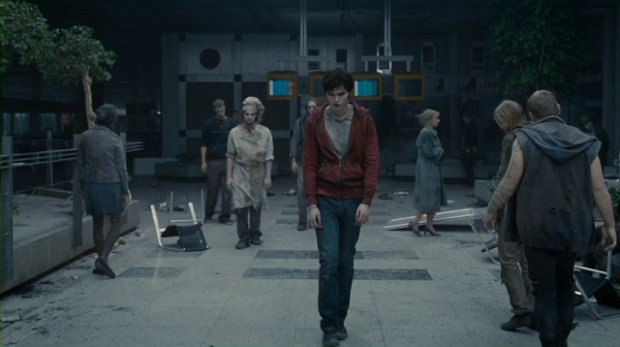
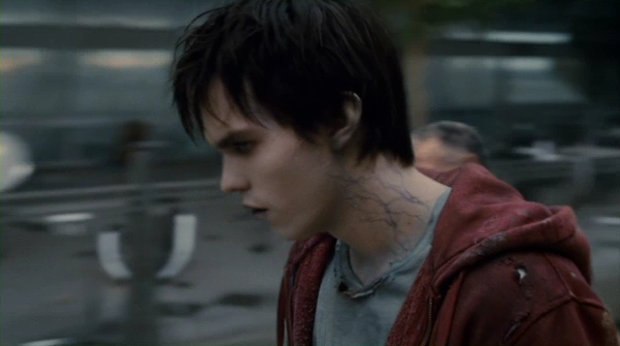
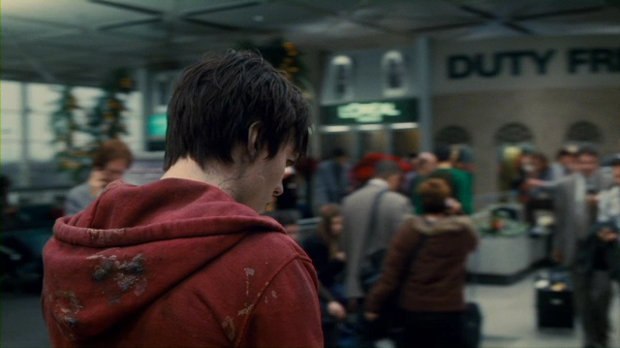
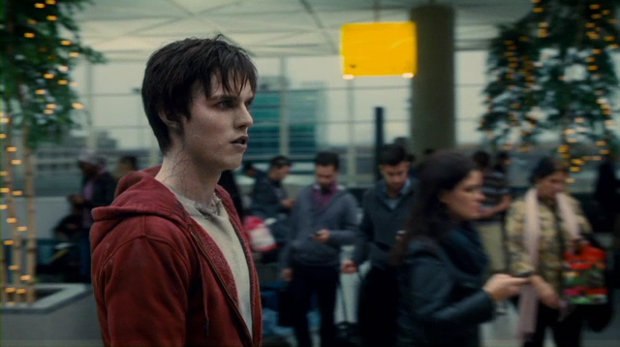
“What we did was a Poor Man’s motion control with a steady cam, and we had our cameraman Francois (Archambault) repeat the move on different days with R walking at the same speed and trying to get it as close to a motion control situation as we could.” With twenty takes to choose from, it fell to the LOOK Effects team to find a way to merge the various elements into a seamless sequence. “We picked the best takes that satisfied performance, for Jonathan, and the ones with the best camera moves, for us, and blended them and adjusted. It’s a matter of retiming the plates and cutting and pasting and painting and rotoscoping and tons of stuff like that,” resulting in “a 2D paint solution” for a 3D transition.

The story also called for R to gradually begin to access dreams – something typical zombies never do. “That was one of the earliest things that we talked about with Jonathan,” Schrecker shares. “The question was not only how do we go in and out of the dreams but how are they going to be shot, and ultimately Jonathan and Javier (Aguirresarobe, Cinematographer) came up with some great ideas.” Alternating between POV and third-person shots, they created transitions in which R reconnects with the sunny, colorful world of the living. “It had to be this intense sensory experience so it was playing around with some different designs and particles and things like that. We had some referenced that we looked at that helped us lean towards the tone that Jonathan was going for.”
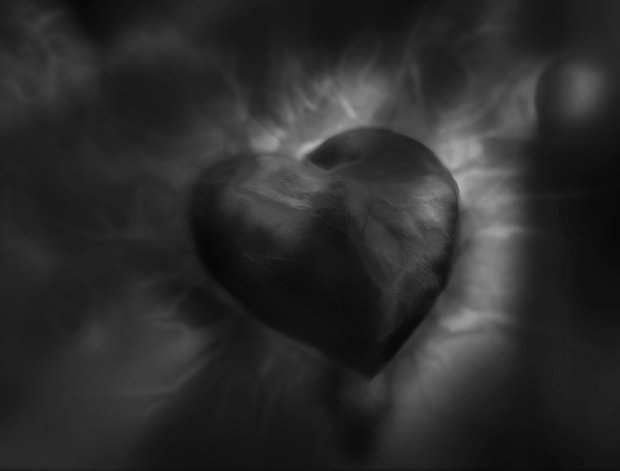

Tone was a real consideration for the shots in which various zombies’ hearts began to beat again. “I watched a lot of movies in preparation for this film, but one of the ones I really enjoyed the visual effects in was Amélie, to the point where we kind of stole the heart-beat thing from them,” Levine admits. Schrecker then tried to find a way to adjust the idea to work for Warm Bodies. “It’s kind-of gruesome because you’re seeing this heart but it’s also sort of an uplifting moment so it has got to have a magical quality. We did a lot of different designs, some which were much more heart-shaped, like a Valentine’s vibe, some that were much more cartoony and some that were more photo-realistic, but not bloody because he’s a zombie and he doesn’t bleed. I was pretty pleased with how it came out.”

The film’s villains – the grotesque Boneys – ultimately made up a fair share of the work. “I think there were over 300 shots and about 85 of them were Boney shots,” Schrecker says of the characters Levine conceived as a tribute to the stop-motion master, Ray Harryhausen. “I knew we’d be doing them with CG, but I was hoping we could mimic that kind of Jason and the Argonauts or Clash of the Titans look. As it progressed it became clear to me that in a movie where tone is a difficult balance, it would be nice to have the bad guys feel threatening and feel like the stakes were real when it came to the bad guys.” Isaac Marion’s original novel, which served as the basis for the movie, offered detailed descriptions of the creatures’ peeling skin and dusty muscles, explaining how “they were basically the next level of the zombie decomposition. We had that framework and within that we had lots of different questions to answer: were they going to be white? Were they going to be black? Were they going to be oily? Were they going to be dry? Were they going to move with twitches or with fixed intention? There were a lot of ways to go and we basically just tried a bunch of different ones.”
As anyone who’s danced along to “Thriller” can attest, any convincing zombie’s got to have the moves down pat. Hoping to find inspiration, Levine watched Pan’s Labyrinth and Terminator 2 before directing his undead on-set. “A lot of the guys who played zombies in the movie were stunt people, so we put tracking marks on them and had them do various walks and then we applied it to the digital Boneys, but it wasn’t quite working. We had to go back to the drawing board and find the movement, and I think it was only really dialed-in about six weeks before we locked picture. It took us a very, very long time to get to that point and we learned that we had to keep making these creatures scarier and scarier and scarier, so we did.”
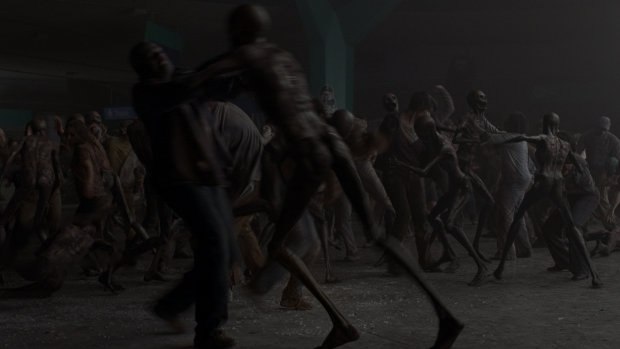
Making sure they all fit in with their surroundings required Schrecker to use a method known as HDRI, or High Dynamic Range Imaging. “What we do is we bring out the Boney maquette and put it in the light so we can see what it looks like when it’s lit with the real light. The other thing we do is a 360-degree capture of the lighting setup using a tripod and a head mount on a tripod, called a Nodal Ninja, so you can get an exact rotation around. When you shoot that, you shoot it with different exposures with some overexposed and some underexposed. Instead of having one picture you have seven pictures, so you can see all the highlights and all the shadows and details, and you take those images and combine them into a single image. This gives you a representation of the lighting on-set, so that when you’ve modeled and animated and textured your Boney you can light it in Maya, render it in V-Ray and you have accurately captured the lighting and your Boney looks like it lives in the plate.”
The climax, with its army of angry Boneys, also made use of the Golaem Crowd plugin for Maya. “Instead of animating a thousand Boneys by hand, you have Golaem, which is a crowd software which creates the crowd and varies it and everything like that. It’s similar to Massive, which was used in the giant Lord of the Rings battle scenes,” Schrecker explains.
The studio also made use of Z-brush and Nuke over the course of production – software that was completely off Levine’s radar. “Every single element of what people were doing was like freaking magic to me,” he says, recalling his visits to LOOK’s expanded studios in Vancouver, British Columbia. “It’s also really nice to go say ‘hi’ to the person who is sitting in their cubicle who I have not met prior to that, but is literally putting in hours and hours of their time. It’s nice to make them feel like they’re connected to the movie in a way.” More than thirty artists were hired to assist Schrecker on Warm Bodies and he remains happy things worked out as they did. “We used this job as an opportunity to build that office up. It’s always tricky to grow a business before you get the work, and it’s always tricky to get the work before you have the business grown, right? There’s always that sticky point and we hit the sweet spot with this one.”
He’s also pretty proud of the fact that Levine now has a working knowledge of visual effects he can put to use in his upcoming endeavors. “I’m glad he’s not scared of them anymore, let’s put it that way! He handled them very well and if he needs some of those elements to tell a story, I’m glad he’ll go for it now.”
--
James Gartler is a Canadian writer with a serious passion for animation in all its forms. His work has appeared in the pages of Sci Fi Magazine, and at the websites EW.com and Newsarama.com.