
Shifting from a communist to capitalist market system has not been easy on the great studios of Eastern Europe. Adam Snyder reports on their survival techniques.
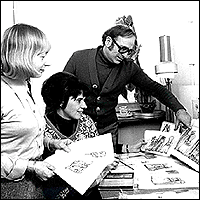
Behind what used to be called the Iron Curtain, the post-World War II years represented a golden era in animation. Between 1950 and 1990 animation studios like Kratky Film in Czechoslovakia, Pannoniafilm in Hungary, SFA in Poland, Zagreb Film in Croatia, and Soyuzmultfilm in Russia churned out thousands of hours of animation, winning dozens of top international prizes in the process. "It was just about the perfect industry for countries under Communist rule," explains Gene Deitch, an American who has been directing animation in Prague since 1959. "It was labor intensive in economies in which 'profit' was not in the vocabulary. As long as the films weren't political, animation provided a rare creative outlet for hundreds of artists." A Violent Change But then came Perestroika, revolution, and the painful transformation into capitalism. Suddenly these vast studios were left to fend for themselves in the international marketplace. They were free of government censorship, but also of government subsidy. Where once they could be content on producing art and children's films for government-owned television stations, now these same stations were being privatized and turning to slick Western animated fare for high ratings.

n the 1990s, most of these once legendary studios tottered on the brink of bankruptcy before being rescued either by the government, or by private financing. "It's depressing," says Maciek Albrecht, an expatriate from Poland whose New York Magik Studio subcontracts work to former colleagues in Krakow. Most recently, Albrecht farmed out the art production for a short to be included in Curious Picture's Little Curious series. "Polish television used to give work to all the local animation studios -- there were about six of them. But now these stations have either given up on animation, or they buy from the international market." "We never had to worry about getting work," explains Zdenka Deitchova, a producer at Prague's Kratky Film for the past half century. "The state gave us money and we could produce what we liked, as long as it didn't get political." Indeed, at Kratky some staff directors were paid their salaries even if they turned out only one film per year.
During this decade, however, almost all of these studios have had to struggle to attract Western clients. Kratky has produced a number of series for the Dutch company, Palm Plus Produkties, and is currently working on more episodes of its international hit, The Mole, which is being 70%-funded by a German broadcaster. Zagreb Film, which hit similar hard times not because of the fall of communism but because of the war that tore Yugoslavia apart, is working on an educational series for Austrian television and two pilots for Tape House Toons in New York. In Hungary, Pannoniafilm is working on a feature length version of The Princess and the Pea with the U.S. company, Feature Films for Families, and Kecskemetfilm Kft. is co-producing with European and Canadian companies.
The Value of a Library
Another way these studios have tried to generate revenue is by licensing their massive archives, much of which have never been exploited outside the Eastern Block. These efforts have met with varying degrees of success. Kratky has been the most sluggish in exploiting its library, which consists of an estimated 1600 animated films, including masterpieces from puppet animation legends like Jiri Trnka and Hermina Tyrlova. One problem has been Kratky's financial instability, which has contributed to a revolving door of sales executives during the past decade. Another snag is the investment it will take to catalog and make quality video transfers of all the films. Rights clearances are also a challenge, since during the Communist era some films were licensed to long term contracts.
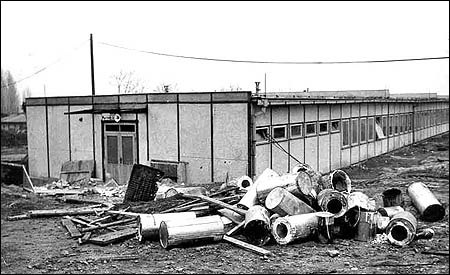
Other Eastern animation studios have had greater success in getting their library films into distribution. Early next year Rembrandt Films and Image Entertainment will be releasing on both DVD and VHS, five hours of animation from Zagreb Film, including such classics as Satiemania and Ersatz, the first non-U.S. animated film to receive an Academy Award. But the most successful studio in this regard has been Moscow's Soyuzmultfilm, which in 1992 licensed much of its 1200-film library to the California-based company, Films by Jove. Jove has subsequently spent more than US$3 million to restore the prints digitally, and, for the children's films which make up most of the library, add new music and redub with the voices of such Hollywood stars as Amy Irving, Tim Curry, Jessica Lange and Gregory Hines. Films by Jove has also footed the large legal bills required to successfully defend the library from the piracy of Sovexportfilm, which in pre-Perestroika times exercised the state's monopoly on foreign trade.
Competition and Co-Productions Another problem these old line studios face is that they are being challenged by spin-off companies that don't have the same bureaucratic or financial baggage. In Budapest, for example, in 1988 Andras Erkel and Csaba Varga saw the handwriting on the wall and left the state-owned production company, Pannoniafilm Kft. to form their own Varga Studio. One of Varga's early jobs was for Gabor Csupo, a Hungarian animator who came to the United States in 1975 and later founded the successful company, Klasky Csupo. Csupo commissioned Varga to make the video for the song, "Do the Bartman," based on the hit TV series, The Simpsons. That proved to be a breakthrough for Varga because it led to work from both Warner Bros. and Viacom's MTV.
As Moscow's legendary Soyuzmultfilm was hitting hard times toward the end of 1989, award-winning animator Yelizaveta Babakhina established Christmas Films, which was immediately jumpstarted when Welsh television channel S4C commissioned a dozen Shakespeare films, which have since been shown in 80 countries in 55 languages. S4C also financed the studio's first feature-length animated film, In My Father's House, a biblical story using the voices of Miranda Richardson, Julie Christie and Ralph Fiennes.

At these new studios, state-of-the-art equipment is crucial. The work the New York studio Ink Tank does in Poland, for example, can be sent to New York by email, and since the same animation tools are used on both continents, the work can be done simultaneously. "Our producing paradigm is the same," says Ink Tank after effects animator, James Dean.
It will be up to a new generation of Eastern European animators to combine the experience and artistry of these fabled studios with the newest animation technologies: "The talent is still here," says Zdenka Deitchova. "We just need to market ourselves better so we can attract new customers and co-producers." Special thanks to Gene Deitch and Zdenka Deitchova. To purchase the Zagreb Film Collection, visit the AWN Store.
Adam Snyder is President of Rembrandt Films, producer of Nudnik and Friends, distributed by Sunbow Entertainment, and several other series distributed by Palm Plus Productions, including classic animation from Zagreb Film and the Sofia Animation Studio, which are packaged into two thirteen part series, Maxicat and Friends and Three Fools and Friends respectively.