
Karen Raugust looks at how the growing demand for interstitial content is creating opportunities for large animation houses and independent animators alike.

The demand for interstitial programming has never been greater. Leading cable networks have long used interstitials, often animated, to help create a branded on-air look-and-feel, test material before creating long-form series, help promote the channel and its content, and bring snippets of entertainment to the air. These days, the growing number of television networks are being challenged more than ever to carve a distinct niche in a fragmented landscape. As a result, theyre increasingly looking for interstitials to help differentiate themselves from their competition.
When Cartoon Network launched, its programming was comprised mostly of library material, such as classic episodes of Hanna-Barbera cartoons. The network created animated interstitials to twist this archival content into something new. We created a brand image through that interstitials work, says Pola Changnon, vp, on-air and exec producer of program production. Integrating interstitials on-air has been something thats been a significant part of our history here at the network.
Cartoon Networks look-and-feel still is built on those classic characters, as well as new ones that have joined their ranks. When it rebranded a year and a half ago, it created an on-air 3D environment in which all of its diverse characters can interact within a single world. Interstitials created by Animal Logic, which also did the rebrand, are a big part of that. Were letting people know that the characters live beyond the boundaries of their timeslot, Changnon says.
Similarly, interstitial content is a cornerstone of what Nickelodeon does on all of its networks globally, according to Keith Dawkins, gm of Nicktoons Network, which has used short-form content extensively both before and after its recent rebrand. First and foremost, its about building a cohesive identity on-air that we believe connects us to the Nickelodeon heritage and legacy, and also lets us stand on our own as a unique brand, Dawkins explains.

Nicktoons Film Festival solicits animated shorts and assembles them into programming packages and uses them as interstitials. Above is grand prizewinner La Revolution des Crabes by Arthur de Pins. Courtesy of Nickelodeon.
One of the networks initiatives, the Nicktoons Film Festival, allows it to solicit short-form content from animators around the world. Not only do these creators compete for prizes and attend special events, their work is also assembled into programming packages and sprinkled throughout Nicktoons airtime as interstitials. Dawkins notes that the festival cements Nicktoons positioning, both to viewers and the creative community, as a destination for animation. It supports our mission as the home base of animation, Dawkins says. It speaks to our commitment to short-form content. We are a place that supports animation in all its forms, and our identity is tied to our commitment to animation as an art form.
Cable programming blocks for preschoolers, such as Nick Jr. on Nickelodeon and Playhouse Disney on The Disney Channel, also feature both interstitials and animated hosts which appear in short intervals between shows to introduce whats next and promote stunts and events as a means of branding their air. Josh Selig, president of Little Airplane Productions, a supplier of preschool content (including on-air hosts such as Piper OPossum for Nick Jr. and Oobi for Noggin) notes that interstitials and especially hosts have a lot to do with Nickelodeons and Disneys strength within this age group. How much of their success is due to what happens between shows? he asks. That relationship between host and child is part of the success. These are identifiable characters that are particularly theirs.

Selig points out that the need for preschool interstitials is becoming more critical as the same shows can increasingly be seen on more than one network simultaneously. For example, the same program could air on PBS, the new Sprout digital channel and Noggin. This overlap makes network differentiation even more of a challenge and creates a need for distinct programming between shows.
Interstitials as Incubators
Interstitials appeal as a testing ground for new characters and concepts is also on the rise. Its like a courtship period before getting married, says Selig. Its a low-cost way to try something out. They can see what theyre getting without the risk of a full series.
Nickelodeon ordered 40 11-minute episodes for Nick Jr. of Little Airplanes Wonderpets, which evolved from two 2-minute interstitials featuring a character called Linny the Guinea Pig, now one of three lead characters in Wonderpets. Similarly, Oobi starred in a long-form series for two seasons on Noggin after being introduced in short-form.
On Nicktoons, childrens book-based interstitial characters Edgar and Ellen will host a 48-hour programming marathon on Halloween weekend, which will lead to a half-hour special and possibly an ongoing series. Meanwhile, Nicktoons first global acquisition, Kappa Mikey, which will launch in 2006, grew out of a relationship with Animation Collective that started with two unrelated shorts, Leader Dog and Tortellini Western.
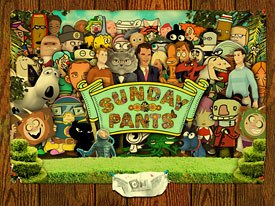
Cartoon Network launched a short-form anthology show, Sunday Pants, that includes acquired and commissioned short films (many in multiples of five to 10 episodes) from studios around the globe, including ka-chew, Global Mechanic, Soup2Nuts Studios, Curious Pictures, Primal Screen and Spazzco. Some of the shorts will be used as interstitials and others may become long-form series. Changnon points out that launching properties as shorts abbreviates the development process, enabling them to appear on-air and generate viewer response quickly.
Although many animators are pitching short-form content specifically, some have tried to sell properties as long-form series, only to see them launch instead as a series of shorts. Little Airplane pitched Disney on the photopuppetry-style Go Baby as a long-form series, but it reached the air as a series of three 3-minute episodes. After those did well, Disney ordered a second batch of five 5-minute episodes.
Entertainment for Entertainments Sake
Interstitials can simply serve as entertainment in their own right, and some concepts work best as shorts. Some of the pitches for Sunday Pants were ideas that didnt quite warrant a full series, according to Changnon. But they were darn funny in a minute or a couple of minutes. They work as standalone pieces and theyre highly entertaining. And we want as much animation as we can possibly squeeze into the day.
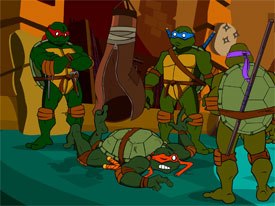
The more programming we can fit in the block without dramatically increasing the cost, the better, agrees Al Kahn, ceo of 4Kids Entertainment, which runs interstitials featuring characters such as the Teenage Mutant Ninja Turtles and Incredible Crash Dummies between shows in its 4Kids TV programming block. Sometimes interstitials cover the bases.
Short form adds a lot of entertainment value to the air, says Laura Sullivan, vp, marketing at Discovery Kids, which uses interstitials both during its cable programming and within its three-hour branded block on NBC.
Meg Guenin, senior manager of marketing for Starz on Demand, believes shorts work especially well in an on-demand environment, since even if subscribers dont have time for a movie they almost always have time for a 30-second short. We want to program content to surprise and delight our consumers, Guenin says.
A case in point: Starz on Demand airs a series of 30-second animated reenactments of films starring Jennifer Shimans Bunnies, which collectively generated 1.6 million views in a five-and-a-half-month period starting in April 2005. The top title to date is Freddy vs. Jason, with 316,000 views; other spoofs range from War of the Worlds and Jaws to King Kong and The Big Chill to Its a Wonderful Life and Titanic. The Bunnies are also shown in front of some full-length features in compatible genres; these viewings are not included in the 1.6 million count.
Sixty 30-second episodes of Deko Boko Friends a Japanese preschool property that originated within a live-action morning show on NHK that translates to Together with Mommy run on Nick Jr., Noggin and Nicktoons. Its unusual in that it was developed to be an interstitial and only an interstitial, says John Easum, evp of VIZ Media Llc., the propertys U.S. rights holder. The short-form format was not an impediment when it came to pitching U.S. networks, Easum says. It actually made it much easier due to the lower risk and the lower impact on network budgets.
Promotional Power
Starz on Demand uses The Bunnies to drive traffic to its films and to certain categories, such as Halloween or Christmas. Anecdotal evidence suggests that some consumers have chosen certain full-length movies in the hopes of seeing a Bunnies short prior to the start of the film. The Bunnies popularity both as a standalone and as a traffic-driver has led Starz to seek other, similar content. Were on the lookout for other applicable animated shorts that fit into our world, Guenin says.

Shiman has created Bunnies promos for the network, including a 30-second spot on the website to drive people to Starz on Demands Quickies category, where they can select Bunnies films or other short content. She also has done a successful electronic media tour that included clips of her interviewing one of the Bunnies.
Discovery Kids holds its viewers attention by offering many of its interstitials in strands, creating a series of five or 10 that focus on a single topic or on an upcoming show. Kids look for them, says Sullivan. We produce them as series rather than one-offs, to pull the kids through the week and keep them coming back for more.
At 4Kids TV, the primary objective [of interstitials] is to introduce children to a new character group or play pattern, Kahn says. But he stresses that the shorts have to be fun and entertaining, even while they deliver their promotional message.
Online and Mobile
Animated interstitials are not only useful on-air, but they are applicable to online and mobile platforms, too. Most networks use some sort of short-form programming on their websites, either to drive viewers to the channel and/or as exclusive content to bring them to the site. Cartoon Network posts several of its Sunday Pants shorts online, which allows viewers to watch them over and over, while enabling the channel to gauge popularity by measuring click-through rates. It also has offered some of its branding spots on the web.
Disney posts Go Baby episodes online after they air on the Channel. The website offers a feedback mechanism, where parents can not only respond to episodes, but can submit plot ideas by suggesting places they think Baby should visit. If its a well-constructed site, its not just about how many hits it gets. It can give you real information to help in the development process, says Selig.
Discovery Kids has used its website (as well as traveling photo kiosks) to collect video, images, stories and anecdotes from viewers, some of which it then develops into live-action interstitials for on-air and online use.

Shorts, especially animated ones, also work well as entertainment distributed over mobile phones, and network-branded and independent mobile services are increasingly seeking such content. Its another platform for consumption, says Changnon. [An interstitial] is short-form and its animation, so its portable in a way a movie cant be.
Short-form takes on a more significant role now than ever before, due to the way people consume media, agrees Dawkins, citing not only mobile services, but video-on-demand and other delivery methods. Its content you can push through on these various media, he continues, adding, Short-form is more commercially viable than it ever was before.
Considerations for Animators
Because of the low risk factor, networks are buying animation from everyone from single creators such as Shiman Bunnies was first introduced to a Starz executive virally to well-known animation houses such as Aardman Animations, which supplies Nicktoons with a series of shorts called The Presentators and has been making short-form content for a long time.
A network deal for a series of shorts can increase exposure for an animator, of course. Shimans website and Bunnies cartoons became established through word of mouth, but the heightened awareness from Starz on Demand increased the number of hits to her site. Weve helped her grow it to a big endeavor, says Guenin.
Creatively, an interstitial is a relatively low-risk way to try out new content, for animators as well as for the networks. It allows us to figure out the style in a short-form piece of work, says Selig. It functions like a pilot, in a good way. Creatively and production-wise its a chance for us to dip our toes into a new animation style.
On the other hand, interstitials, on their own, tend not to be lucrative for an animator. You have to look at it as an investment or almost a loss leader, says Selig. Its not until it goes to a full series that it makes sense financially.
Still, animation houses increasingly are pitching short-form content, hoping to use the sale of an interstitial series as a steppingstone to more and/or longer-form work. Weve been receiving more and more pitches for interstitials from outside sources, says Sullivan, who reports that most of the shorts airing on Discovery Kids are developed in-house. We receive pitches for interstitial strands now, and that didnt use to happen. Its become a viable entertainment option.
Currently, cable networks are more likely than broadcasters to purchase interstitial content; they have more flexibility in timing and are not as dependent on 30-minute programming blocks. Kids networks in particular have more time available for interstitials, since theyre allowed less commercial inventory, and they therefore can feature more shorts without reducing the time devoted to other promotional content. But demand for interstitials should continue to increase among all types of networks from digital channels to on-demand venues to alternative delivery methodsas competition grows and each service looks for ways to differentiate itself and keep viewers coming back.
Karen Raugust is a Minneapolis-based freelance business writer specializing in animation, publishing, licensing and art. She is the author of The Licensing Business Handbook (EPM Communications).