Visual effects veteran Michael Fink charts the history of previsualization. Includes QuickTime previs clips!
If you have the QuickTime plug-in, you can view a previs clip by simply clicking the image.


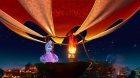
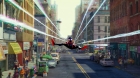
Previs images from X-Men 2 show front tilt (top) and rear tilt (bottom) movement of the X-Jet. All X2 images TM & © 2003 Twentieth Century Fox.
Previs has been done since long before the advent of digital image making. In the pre-digital, photo-chemical/practical days, nearly all effects shots with camera movement (with the exceptions of some pan and tilt options) were motion control. Before getting to the motion control stage, we did previs with foam core cut-outs, video (when it got to the level of hand-holdability), paper dolls and action figures. We showed location stills to which we had added hand drawn foreground objects or figures. We showed videos with crew members running through the frame holding airplanes on sticks. We showed videos of motion control moves. We showed previsualizations made from hand drawn storyboard keyframes shot on video or film. As we got closer to shooting the real thing, we showed black-and-white motion control move tests that were processed in-house in minutes and shown to directors on Moviolas and flatbeds for approval. Movies were cut on film, so a black-and-white move test could be cut into the reel and viewed in context right away. Wow!
In the late 80s, lipstick video cameras made the presentation of previsualizations of miniature shots and complex live-action shots easier. But, lenses didnt match real-world lenses, and camera moves were approximate. The idea of rendering scenes in 3D for previs was a concept that many of us wanted to try, but we didnt have the software or the computing power. Finally, digital previsualization became a reality, with many limitations, in the early 90s.

My own experience with digital previs began in 1978, when I worked at Universal Hartland, an effects facility started by Universal Studios to support their films. One of the people I worked with was Colin Cantwell. Colin is a brilliant designer known for his fine eye and technical savvy. (He was responsible for the truly great graphics in WarGames three years later.) Colin began experimenting with a small HP computer (I dont recall the model), and set up views of 3D models of the ships that were in Buck Rogers with some basic real world lens information, and printed out (with a dot-matrix printer) storyboards that were wireframe renders of the shots we were to shoot on the stage. This was the first digital previs I can remember seeing and it was hugely helpful. Not to mention what an eye opener for the rest of us.
In 1981, on WarGames with Colin, we printed out books of images (dot-matrix, still) representing the screen wall in the NORAD war room, showing the progression of the action through the scenes. Colin produced all the graphics for the film on HP 9845C computers, which also did the previs books. This was a complex task. We had images on 12 screens covering five weeks of shooting, all working in sync with each other. Completion of this without digital technology, and without Colins book, would not have been possible.
The first moving digital previs I can remember doing (other than maybe some small bits on D.A.R.Y.L. in 1985), was on Batman Returns. Tim Burton had storyboarded a title sequence that involved miniature shots with water that were complex and potentially very time consuming. We had 11 days to shoot our 10 miniature set-ups, and there was no time for take twos. So, using Richard Hollanders VIFX facility, we hired Craig Reynolds (inventor/writer of Boids flocking algorithm) to come in and work on a Symbolics computer to animate the action and camera moves, again in wireframe. No time for shading in those days. Craig completed the animation and output the individual shots to video, where we cut them together into a full title sequence. Tim approved it, and away we went.
From then on, I used digital previs on every show I did.
On Babys Day Out, I had a small in-house previs team to help with the technical aspects of shooting the fairly complex composites we needed to produce. Most of this animation was done on Mac 950s with Ifini-D software pretty speedy in 1993 terms. In this case we were able to shade and texture our outputs to give them more life. This was the first show in which I played back the previs to mix with the live-action in realtime to check camera angle, speed, etc.
On X-Men, we fully animated the Train Station sequence, the fight on the Statue of Liberty, the X-Jet, the Mystique shots, Senator Kellys escape and, of course, Cerebro. The previs helped explain to the director and the rest of the crew what the technique would be. Once the director approves a sequence, I break the sequence into its parts and render the parts as they need to be shot. For instance, with blue or greenscreen shots, I replace previs backgrounds with blue or greenscreens as they will be built on stage, and lay a grid on the screen for size and angle reference. This gives us a check to make sure we dont have too much or too little screen, and the grips and gaffers know how to rig and light the screens. I also use the previs with the special effects and stunt people to determine the best way to rig and shoot the action, and with the DP to determine lighting and camera issues.
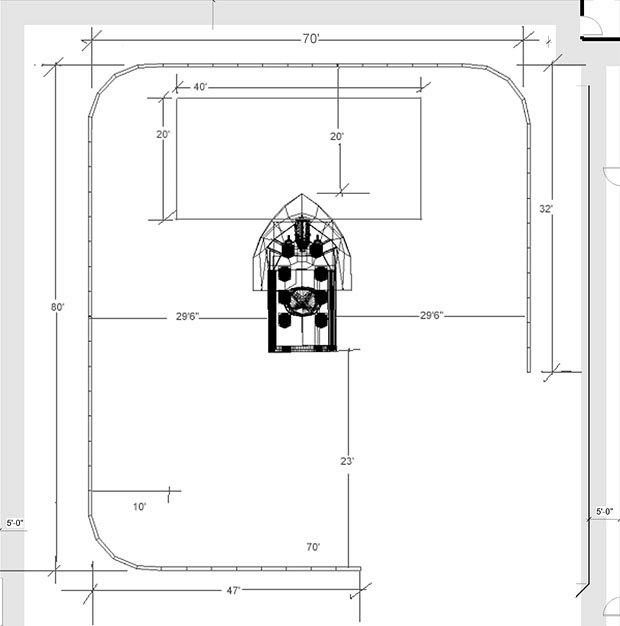
On most shows that I do, the previs is stored in the video assist persons computer so that it is always accessible on the set for reference as we shoot.
The most powerful aspect of previs is its ability to show what the problems will be with set-ups in difficult locations or with difficult rigging situations. On Clockstoppers, we used previs to determine motion control moves well before we got to the location. This was very important on that show because the motion control had to fit in some very tiny spaces. We modeled the rig, and placed it on the virtual set so that we knew beforehand that everything would fit. We then exported the move to the moco rig from the previs, and used the previs move (usually with small edits) to drive the camera on the set.
Previs now is getting very elaborate. On X-Men 2, we used previs not just for the technical aspects of filmmaking, but to determine dramatic points as well. I worked with Tom Sigel on many shots to previs lighting set-ups as well. This saved much time on the set, particularly with the rigging crew that needed to stay one jump ahead of us.
On the show Im working on currently, Constantine, a sci-fi thriller starring Keanu Reeves, we are previsualizing all of the action and effects sequences in the film to aid not only in the scheduling and production of the film, but to help the director show the studio what we intend to shoot. We are trying, in these sequences, to give some representation of the appropriate lighting of the scenes. For this film, lighting is critical to visualizing how the scene will play out. The schedule and budget on Constantine are very tight, and previs helps everyone understand what they have to do to create the film.
In technically challenging motion pictures, previs is now absolutely essential. And, because of the expense and time required for some effects shots and sequences, previs is being used more and more often as a political tool directors present their vision of a sequence to a studio to get budget approval and to give the studio executives a better idea of what the film might be like. This is particularly important in extremely complicated and expensive sequences such as the X-Jet Tornado Chase in X-Men 2. It has been the critical element in getting the approval to spend millions of dollars on a sequence or tens of millions on an entire film.


In Babys Day Out, Fink mixed previs and live-action footage in realtime to check the camera work. TM & © 1994 Twentieth Century Fox.
The new demands on previs require that previsualizations have more complex lighting, textures and animation. Luckily, these demands have been met by the ever-increasing sophistication of the software, so weve had the time to refine the images based on the needs of the project. In recent projects, weve been using higher-end software, such as Softimage XSI and Alias Maya, because of the complexity of the animation. As previs technology gets more sophisticated, and the importance of previs moves from just the technical and into the aesthetic, political issues come up when we create animatics that I must be conscious of. For instance, the director of photography is the person on a film who has the responsibility to set shots and help the director decide on lens, camera and lighting choices in his attempt to tell a story. But I often have scenes previsualized months before the DP is hired. The DP, and any others involved in helping the director tell the story, must be brought into the previs process as early as possible so that there are no surprises, and no bruised egos, along the way.
In the recent films Ive worked on, previs sequences have been cut into the film to give continuity to the cut before the sequences have been photographed and completed. This has been very successful, to the point that there are times when the editor and the director, used to seeing the same previs shot in the film for months, come to believe the shot is done they forget they are looking at previs since all their work is at video resolution.
A slightly darker, but sometimes funny, side of previs is that there are many times when the look of a favorite previsualized shot cannot be duplicated exactly in live-action. Although the live-action may be great, the director is so used to seeing the previs that he or she may have a hard time accepting the real footage. In the end, it always works out, but it has led to some interesting days on the stage and in the cutting room.
I cant imagine mounting a visual effects effort on a film now without previsualization. Just like many of the tools we use (I remember the days before video assist. Yep, its true.) previs has become an essential tool in producing any film with complicated visual storytelling.
I truly enjoy the process of previsualizing scenes, and I expect that it will only get better.
Michael Fink has been involved with visual effects since he was a young boy, when he created his first miniature shot a still of a rocket to the moon in the hallway of his parents home.
In 1995, Fink joined Warner Bros. in starting a new venture Warner Digital Studios a full service visual effects facility. Under Finks direction, Warner Digital grew to 150 people, and produced highly lauded effects for such films as Eraser, Mars Attacks! and Batman & Robin, as well as commercials and special venue films. In the fall of 2000, he joined Cinesite Inc. as a senior visual effects supervisor. Fink was honored in October 2001 at the Premio Imaggine in Milan, Italy, for his contribution to the art and science of digital filmmaking. Fink is on the board of directors for the Visual Effects Society.
| Attachment | Size |
|---|---|
| 1897-x2dfgsfronttiltdemo.mov | 824.17 KB |
| 1897-x2dfgsreartiltdemo.mov | 416.25 KB |
| 1897-x2dfgsfronttiltdemo.mov | 824.17 KB |
| 1897-x2dfgsreartiltdemo.mov | 416.25 KB |