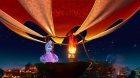
Director Ari Folman tells Joe Strike all about the animation techniques and deeper meaning behind his acclaimed Waltz with Bashir.

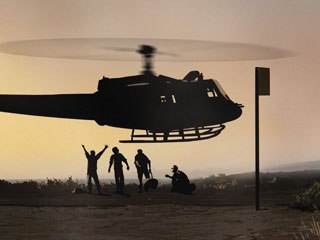
In 1982, Ari Folman was a soldier in the Israeli Defense Forces on duty in Lebanon, part of the army occupying Israel's neighbor during that country's ongoing civil war. Only 19 at the time, Folman and his unit were stationed on the outskirts of Beirut's Sabra-Shatila refugee camp -- while inside, a Lebanese faction was taking bloody revenge on the camp's Palestinian residents for the assassination of Bashir Gemayel, the faction's leader. The massacre took the lives of hundreds, if not thousands of Palestinians.
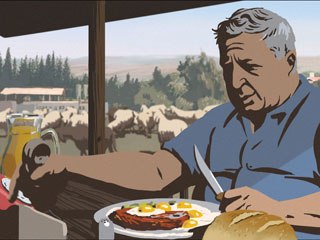
In its aftermath, several Israeli leaders were accused of looking the other way and allowing the massacre to take place. Ultimately, Israel's defense minister was forced to resign -- a disgrace that did not prevent him from becoming the country's prime minister 20 years later.
Folman and his army friends went on with their lives; Folman entered Israel's entertainment industry, writing and directing films and TV shows, including Be Tipul, a dramatic series that would be remade in the U.S. as HBO's In Treatment.
Years later, Folman reunited with one of his fellow soldiers. The man described a recurring dream of being pursued by a pack of bloodthirsty dogs. The two realized neither could remember the details of their time in Beirut -- and that the friend's dream of dogs was connected to whatever they had witnessed in 1982.
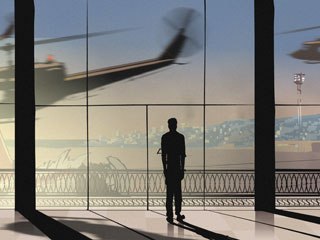
Just as several other contemporary documentarians have done, Folman set out on a quest for the truth, with himself on camera as the protagonist. However, unlike others, Folman turned to animation, the most unreal form of filmmaking -- but one perfectly suited to fill in the missing pieces of an emotional jigsaw puzzle. The result is Waltz with Bashir, a Citizen Kane-style recounting of Folman's search and what he discovered. The animated feature is replete with phantasmagorical imagery and surreal dream sequences; the film opens with an unsettling depiction of his friend's canine nightmare. The movie's overall look and feel is dreamlike in its own right, thanks to a unique combination of conventional, Flash and CG animation together with a carefully chosen color palette and bold character design. For the first time, two Israeli animated features have qualified for Oscar consideration in the same year: Waltz with Bashir and $9.99. And thanks to strong critical buzz, Folman's film stands a good chance of getting nominated.
Today Folman is a handsome 45-year-old with a salt and pepper beard. In appearance he resembles the The Hunt for Red October-era Sean Connery, far removed from the gangly teenager he depicts himself as in Waltz's many flashbacks to wartime Beirut. In voice, however, his Israeli accent and Hebrew-influenced sentence constructions give his speech a poetic quality and make him sound almost like a Talmudic scholar. It's an impression intensified by Folman's wide-ranging curiosity, exemplified by the many questions he directed at me about my own interests and opinions during our recent conversation...
Ari Folman: If we only talk about animation, I'm happy.
Joe Strike: I'm sure we'll talk about the film's politics as well, but for now let's start with the animation. What was your inspiration for the film's visual style?
AF: Graphic novels, many graphic novels -- not animation.
JS: Any ones in particular?
AF: Joe Sacco's Palestine, [The Fixer: A Story from] Sarajevo and anything we could put our hands on. Some French graphic novelists did work in Afghanistan, journalistic coverage in graphic novels. It's not Watchmen.
JS: The production notes say the film is a combination of 2D, Flash and CGI; how did you mesh these separate techniques?
AF: The movie is basically done in Flash. We took the cutout look to the extreme. You can't make any progress in Flash within the software. During production I realized slow movement is our biggest downside. A person walking slowly from the door to this chair is much more difficult in terms of how it looks in the end, compared to big tanks, fighting scenes where everything moves very fast and there's a lot of sound around too.
We tried to put as much as we could in the budget for classic animation. Sometimes you'd see someone walking and just the lower part of their legs would be in classic animation.
JS: How do you put classic animated feet under Flash animation?
AF: It's complicated, complicated. There's classic animation in the waltz scene [where a maddened Israeli soldier spins in a circle, firing his machine gun]. You'd be surprised but the opening dog scene is completely in Flash, although it looks like classic animation.
We used 3D only for a "touch of flavor," I would say: aerial shots, crane shots, tracking shots, in-between scenes -- just for beauty and not more than that, to give the film some depth. I'm not really fond of 3D animation, but if it's within the limits it's good taste.
JS: Who helped you realize your vision?
AF: The director of animation in this film is a genius in technology. His name is Yoni Goodman. Everything in the film that is there in terms of technique, he invented it. He is really a professional.
In 2005, I was in San Francisco for something else. I called Macromedia – "My name is Ari Folman, I'm making this feature-length film in Flash. I have some lovely scenes here with me. Maybe someone would like to see what we're doing with the software." They said, yeah, sure -- we hope you're far away from the building, and that was it.
JS: A lot of people complain about Flash -- that it's not as flexible or artist friendly as it could be.
AF: Well, at 600 U.S. dollars for the software it, we love it.
JS: Are the dreams in movie actual dreams?
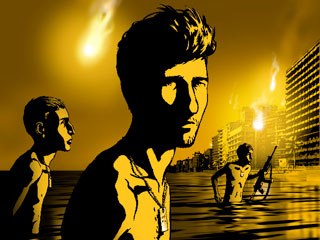
AF: The image of three soldiers coming out of the water [onto a Beirut beach] is more a vision than a dream, a daydream.
JS: You had no memory of that period.
AF: I had a memory: I just had black holes in the storylines that I wanted to fill during the search in this film. I didn't go thru a car accident and a brain concussion, now I don't remember who I am or where I grew up. The memories got suppressed because I tried really hard not to remember. This is it, no big deal, I just put a lot of effort not to remember.
JS: Your first experience with animation was putting an animated segment in front of your Israeli TV series...
AF: Material That Love Is Made Of. I made this program about love. We followed eight love stories and I wanted to put in a scientist talking about the scientific aspects of love. As much as I tried in the edit room, they always seemed patronizing over the characters. The real people, the interviewees were going through such dramatic events in their lives. They were having mental breakdowns and depressions and those guys from the lab, they'd say, "This girl has problems in her cortex and the front of her brain with the neural transmitters." It was like stupid, thanks a lot.
But I wanted it. I decided why not just use their sound and draw them and feel free with the drawings to interpret what they said? We did that with very basic Flash animation, not really developed like you see on the Internet, but very fun. We did a lot of crazy stuff, we really went wild because we could.
It's not rotoscoping -- I don't like rotoscoping. We were using Flash to give an interpretation to what they were saying. It was really simple but very funny -- I was having great fun.
I knew my next project would be animated; I wanted to explore it in depth. Everything I did in life was always on the verge between reality and dream. I never thought that animation for me was the perfect medium until I did it.
My next film is going to be animated -- a science fiction film.
JS: Have you seen much anime?
AF: This is more complex. It's based on a book I optioned by Stanislav Lem [a highly respected Polish science fiction author], The Futurological Congress. He's brilliant, more a philosopher than a writer. [Lem's novel Solaris has been filmed twice, once by Andrei Tarkovsky and again by Steven Soderbergh.]

JS: Now I have to go out and look it up, I haven't read much science fiction in recent years.
AF: Did you read it when you were young?
[At this point Folman and I found ourselves comparing notes on why we no longer read sci-fi, with the director as much, if not more, interested in my opinions on the subject as in sharing his own. With more than a bit of reluctance I returned our conversation to the subject at hand.]
JS: How much of an animation industry is there in Israel?
AF: There isn't.
JS: There is not?
AF: Well there is. This is the second ever [Israeli] animated film. The first one was a stop motion picture, Joseph and His Brothers, a biblical story made in 1961. And this is the second.
There were only eight animators in Israel qualified to do the job. We started with six, then we found another two. We needed two more and we couldn't find them. So this is the state of animation [in Israel].
And all of the [animation school] graduates now, they graduate, of course, in 3D. Most of them, they don't do 2D animation.
JS: And most of the 2D animators are trying to learn CG as quickly as possible.
AF: It's a quick learn so they can do it. But my next project is 2D as well.
JS: You're probably going to have 3D elements, CGI in there as well.
AF: We will, but, you know, I really don't like, I never made the transformation from 2D to 3D in terms of taste. For my kids, this is the only thing they know. They see Jungle Story...
JS: [ The] Jungle Book?
AF: Sorry, Jungle Book, they see the classic Disney films, Bambi, they love it. But for them The Incredibles is natural.

JS: In recent years computer animation's been able to achieve subtlety in acting -- the expressiveness and the emotions that you had in classic animation, the little tiny nuances of the eyes, the face, and that's something they didn't really have early on.
AF: Yeah, but you know for me it's all about the screenwriting.
JS: Of course.
AF: I think the first Pixar film was very non-developed in terms of animation, but it still holds, it's an incredible film, you don't care about the technique when you see it. Kids love it because the story is incredible; the characters are fascinating.
JS: Did you use animation to tell a war as a way of distancing yourself from discomforting material?
AF: No, not at all.
JS: What was the reason then?
AF: Freedom.
JS: Freedom?
AF: I never treated it as a war story. It is, but not in my mind. In my mind, it's a search after memory, and memory in animation is perfect. You're right, it is a war movie, but not in my eyes.
JS: Because in memory things are very stark and you just remember the basic vividness.

AF: No, just the freedom to -- I don't know why there isn't any adult animation, there is some.
JS: It's creeping in slowly. I was just talking to a friend about how long it took comic books to earn some literary respect and now graphic novels are respected and accepted as a legitimate form of narrative storytelling... I think same thing will eventually happen in animation.
AF: You think so?
JS: It's starting to happen. There's your film, Persepolis, $9.99... you're probably familiar with the author, Etgar Keret [the Israeli writer whose stories were adapted into $9.99.]
AF: He's a friend.
JS: Small country, small world... I have to say I'm very much enjoying talking to you. This is more like a conversation than an interview.
AF: Good, because I want to ask you questions too. It's good to have people from the animation field so we don't have to speak about politics, we can speak about what's bothering me.
One night after work we saw [Finding] Nemo and we counted 42 people responsible for lighting -- and we were six animators [essentially Bashir's entire animation crew]. We said, "What the hell are we doing here? How are we ever going to complete this film?"
JS: Well, they have a $150 million budget; what was yours if I can ask?
AF: $1.7 million. The Pixar and DreamWorks films make a lot of money.
JS: They're part of a licensing juggernaut. You're submitting Waltz with Bashir for Oscar consideration; any thoughts about competing with $9.99?
AF: No.
JS: No Israeli rivalry then?
AF: I never thought about it until this second.
JS: One last question. Waltz with Bashir follows you as you try to recapture your lost memories of your time in Lebanon. The film ends with a revelation regarding the massacre, told in animated form by one of the people you interviewed, which is then followed by actual documentary footage [of the massacre's aftermath]. But you don't return at the end of the film. There's no closure, you sort of vanish at that point. Was that was a deliberate decision?
AF: Yes it was.
JS: Why was that?
AF: Because my story ended. Once you enter the camps with the journalist and you saw the destruction and then you saw the live footage, I have nothing to say anymore.
JS: But there's no scene of you recovering your lost memories, no realization, grief, tears of relief -- nothing like that.
AF: Do we need that?
JS: I don't know, maybe I've been conditioned by Hollywood to expect something like that.
AF: I think that it's now in a different dimension, the film. Those 50 seconds, they put everything in proportion, making me and my personal story, with all due respect, it's not about you: it's "look at what happened." There is a journey here to find... an assumed truth. We find it and then there was no vision. We were standing at the outskirts of the camps, you see me there. This is it, there's nothing more to say.
Joe Strike is a regular contributor to AWN. His animation articles also appear in the NY Daily News and the New York Press.

Joe Strike has written about animation for numerous publications. He is the author of Furry Nation: The True Story of America's Most Misunderstood Subculture.