
Alain Bielik uncovers ILMs creature work in M. Night Shyamalans latest fable, Lady in the Water.
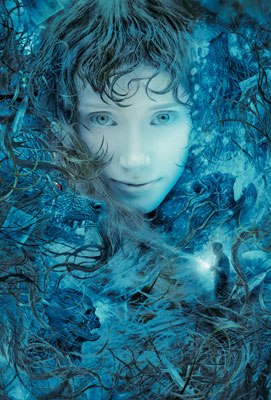
After enchanting us with ghosts, superheroes, aliens and mythical creatures, master storyteller M. Night Shyamalan is back with the story of a nymph (Bryce Dallas Howard) who ventures into our world, bringing terrifying creatures along with her. Typical of the director, Lady in the Water (released by Warner Bros. on July 21) features low-key vfx. For the third consecutive time, Shyamalan turned to Industrial Light & Magic to provide the more fantastic aspects of his movie. Visual effects supervisor Edward Hirsch and visual effects producer Jeanie King oversaw more than 86 vfx shots, up from an initial slate of 50 shots. Our shots encompassed about 50 2D vfx, including sky replacements, fog addition and various enhancements; the rest was 3D creature animation, says digital production supervisor Kevin Barnhill. Obviously, the creatures shots were the most demanding, and they required quite a lot of R&D.
The movie features three different types of creatures, all designed by conceptual artist Mark Crash McCreery (The Village). The Scrunt is a hyena-like beast that has the ability to completely blend in the lawn, due to the spiky grass-like hair that protrudes from its back. The Tartutics are simian-like creatures that camouflage themselves in trees. Finally, the Great Eatlon is a giant and majestic eagle. From early on, Shyamalan was keen on shooting practical creatures as much as possible, limiting the use of 3D animation to shots that couldnt be captured in camera. To this purpose, he commissioned creature and make-up effects supervisor Mike Elizalde and his Spectral Motion group to fabricate the creatures. The Scrunt was built as a fully animatronic puppet, while the Tartutics were brought to life by actors wearing sophisticated suits. Although the Tartutics shots required some blue screen composites, they never necessitated the creation of digital doubles. This was not the case for the Scrunt, a beast that had to be seen running, jumping, fighting: all actions that couldnt be performed by the puppet.
Based on the story-boards, we decided on a shot per shot basis what could be done practically and what had to be done CG, Barnhill explains. During principal photography, we tried to shoot a clean plate for every creature shot, just to give Night the option of modifying the action later on. But it was not always possible. The shooting schedule was really compressed, no more than two months, I believe. So, we very seldom had the time to shoot a clean plate. As a result, we had to paint the puppet out in a number of shots in order to replace it with the CG version, mostly because Night wanted to adjust the performance. There was one shot in particular that we had to alter. It was a tight close-up on the Scrunt face. After the fact, Night decided that he wanted more emotion from the character. First, we tried to manipulate the images using Sabre, our proprietary 2D tool, trying to morph between expressions, but we didnt quite get to what Night wanted. So, we ended up completely replacing the puppet with the CG creature, as to have complete control over the performance.

A Challenging Design
With grass for hair and a skin made out of twigs, the Scrunts morphology presented unique challenges for the modelers, riggers, and tds. Plus, the CG creature had to be an exact match of the practical puppet. To this purpose, Spectral Motion provided a full-size hairless body, all painted and textured, that was scanned in high resolution. Since the skin surface was so complex, we decided to use an interesting approach to build the model. After getting the scan, we did a ray-trace of the creature and then use ZBrush to create a displacement map. We then took that map to bump out all the details and get a three-dimensional look on the twigs. As for the hair, we designed a shader that would give us a flat blade of grass with a deep root. We could then interpolate color from the root to the tip. On top of that, we added some fractal noise to give it a little bit of texture. In order to manipulate the grass, we had guide splines that were imbedded into the mesh, every four or five inches. We would then interpolate between those splines to create the full grass look. This approach allowed us to end up with a lot more grass. What was great about those splines was that we could style the CG Scrunt to look exactly like the puppet. We noticed that, depending on the camera angle, we had to give it a different hairstyle to match the live-action. We ultimately created four or five different styles.
The various textures were first created using still photographs of the puppet, which provided a good basis, but most of the details were eventually painted by hand. In the end, the match between the CG creature and the practical puppet was so perfect that Shyamalan decided to add a whole series of 3D animation shots, late in production. As production progressed, he really started to feel more confident about CG animation. I think he was actually surprised about how good the CG creature looked

Built in Maya and ZBrush, the creature was rigged in Block Party, a proprietary rigging tool that is integrated into ILMs main Zeno platform. When time came to animate the Scrunt, animation supervisor Tim Harrington looked at various stalking animals, mainly lions, to get appropriate references. The goal was to carry intelligence, emotions, but also a ruthless personality. The animated creature was finally rendered in RenderMan. We decided that sub-surface scattering or any similar technique was not necessary. With a flesh basically made of twigs, there wasnt much of a sub-surface quality to the skin. Also, the shots were all very dark and wet. So, it didnt lend itself to that kind of technology. For the most part, we just use a plastic shader. At that point, our initial choice of using displacements maps to create all the skin details really paid off. Had we tried to build a polygonal structure that mimicked all the twigs, we would have ended up with a very heavy creature to render. As it was, the Scrunt rendered pretty easily. Once rendered, the creature was composited with Comp Time, our in-house compositing package, with Sabre being used on about 15 shots. Marshall Krasser was our compositing supervisor.
Flattening the Beast
One of the Scrunts distinctive features is its ability to drop down into the grass and seemingly disappear, its grass back blending in with the environment. The main shot had to show the creature rising out of the grass. We first did some shape work to flatten it down, and also shaped the hair so that it would stand up like real grass. Ed Hirsch shot additional grass elements that we composited on top of the Scrunt and in front of it. When the shot starts, the creature is completely flat, and as it rises up, we interpolated that shape back to its normal geometry. So, it was hand-animated and shape-animated. Simultaneously, we animated its hair back to its normal style. Some ugly things did happen to the skin during that transition, but we managed to cover it with the grass. Thanks to the camera angle and the foreground elements, it was pretty forgiving
Compared to the Scrunt, the Great Eatlon turned out to be a much simpler creature to build. With its 40-foot wingspan, the creature is supposed to be the last of an otherwise extinct species of giant eagles. The body itself was pretty much a B-spline model. For the feathers, we built small meshes in the shape of little rectangles that we hanged off the wings. We would then use a paint map to get the feather look, and an opacity map to cut it out of the edges. We knew that we were not going to have any close-up on the Eatlon. It meant that we could go a little bit lighter on the build. For instance, we didnt feel that we needed to model any thickness in the feathers because the camera was never going to be that close. It was more built to read well in mid-shots. We did run simulations on the feathers to create some buffeting when the creature is flying.
One key Eatlon shot required the creature to grab the nymph, as seen from underwater. Because of the distortion of the water, it was not necessary to build a detailed CG model of Howard. ILM animated a fairly simple model with some cloth simulation on the dress. To match the natural distortion of the water on the Eatlon, ILM used Sabre to create a noise pattern that would mimic the underwater look of the live-action plate and break up the edges of the CG creature.
Selective VFX, High Impact
Although Shyamalan uses quite a lot of visual effects in his movies, he never really makes effects movies per se. His approach is more to build excitement around key effects shots. For ILM, this meant going back to the Jurassic Park school of filmmaking. In Nights movies, you think there are more visual effects that there really are, Barnhill concludes. When you came out of Jurassic Park, you thought you had seen a huge effects movie, but, in fact, there were less than 60 CG animation shots in that film! Night has a similar approach in the sense that he uses his effects shots very wisely. He really works to build up to that moment when the effects shot comes up, so that it gets maximum impact. Personally, I like films that tend to have less effects, but in which the impact of every shot is amplified via clever editing and directing. I think that Lady in the Water is typical of this approach.
Alain Bielik is the founder and editor of renowned effects magazine S.F.X, published in France since 1991. He also contributes to various French publications and occasionally to Cinéfex. Last year, he organized a major special effects exhibition at the Musée International de la Miniature in Lyon, France.