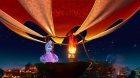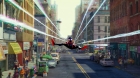
Animal Logic creates a series of interstitials to complement Cartoon Networks international rebranding effort. Includes QuickTime clips!
If you have the QuickTime plug-in, you can view three of the Cartoon Network interstitials by simply clicking the image.
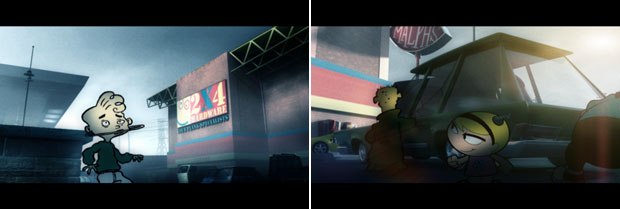
When Cartoon Network (U.S.) wanted to create a series of :60 interstitials to complement its recently introduced on-air look, it turned to Animal Logic, a vfx firm based in Moore Park, Australia. The two companies had worked previously on the networks 2004 rebrand, with Animal Logic creating IDs, promotions and other elements. The bumpers Hide and Seek (previously titled 28 Days Later), Street Cred, In the Bag, Laundry Day and Good Car Day take 2D-animated characters from many of the networks catalogue and integrate them into a 3D environment that reflects the style of the rebrand.
Not surprisingly, each interstitial tells a humorous short story.
The interstitials were pitched to us as being comedic, one-minute-long shorts involving characters from different shows, interacting within the `Cartoon Network Universe, explains Grant Freckelton, Animal Logics vfx supervisor and lead art director. So in that respect, we approached the project as if we were making a series of animated shorts.
Sophistication and Attention to Detail
Cartoon Network charged Animal Logic with creating high quality, smart and sophisticated visuals to match the scripts it provided. Pete Johnson [Cartoon Networks on-air creative director] and Kevin Fitzgerald [the networks art director] were very much into the idea of making [the interstitials] as visually sophisticated as possible, using a 16:9 format and asking us to board them with cinematic sensibilities, as opposed to simply producing a cartoon for kids, continues Freckelton. As a result, the house brought in storyboard artists and animation directors with experience in animation and film to board out the scripts. It also made sure it delivered 3D animatics to Cartoon Network as soon as possible, so network executives could get a feeling for how the lensing and timing would look in 3D.
Animal Logics artists were more than happy to provide added detail and production value. One example: We pimped Scoobys wagon, offers Freckelton. One of our 3D artists took the Mystery Machine model we had built for the reface and added extra detail on the exterior and interior. Eventually we had a Mystery Machine that was decked out in red shag, complete with a disco ball and awesome 8-track. We had a whole lot of fun doing it!

Backgrounds also feature lots of knowing details, including references to cartoon characters and famous animators that are woven throughout the environments. For instance, in Street Cred, a strip mall-lined street featured signage identifying such store names as Scoobys House of Snacks, McKimsons Chicken and Biscuits and The Anvil Depot. In addition to the scripts, Cartoon Network provided model sheets and bibles for its shows, which the animation team utilized to create the characters that appeared in the interstitials, and vector artwork from the promotions department, which production designers used to create the backgrounds.
The Process
The first step in the production process was to take photos of buildings, streetlights, fire hydrants and other elements characteristic of an urban street scene. We really wanted the environments to look real, but still have the warped perspective lines and vivid color schemes common to 2D backgrounds, says Geoff Valent, Animal Logics animation supervisor. After assembling a library of reference images, the company created concept art of the buildings, locations and props needed for the backgrounds.

From there, we started to build and texture the elements in 3D, which were then stretched, warped and twisted using lattices, Valent explains. Weve been using V-Ray as our primary rendering package for a long time and really wanted to take advantage of the fast ray-tracing and global illumination. So all of our textures were based around rendering with V-Ray.
The biggest advantage of using global illumination is the accurate shadows, and bouncing of light, Valent continues. In fact, many of our scenes, especially the downtown ones, were lit with a single light. Lighting scenes this way saves a lot of time, which can be put into other areas.
While the 3D elements were coming together, Cartoon Network began sending in the scripts. Usually you get a script and a storyboard from a client, but for this project we created the storyboards from our end, explains Valent. Thanks to the awesome Cartoon Network writers, we were given a lot of freedom to add our own creative ideas into the final bump.
Once Cartoon Network approved Animal Logics storyboards, the vfx house started animating layouts in 3D, which served as background plates for the 2D animators. Because we were working to a pretty tight schedule, the layouts were done very rough and fast, and then tweaked after the backgrounds had gone to the 2D animators, Valent reports. Once the 3D animation was finished, the scenes were rendered. Although the 3D elements were built with quite a lot of detail, most scenes required shot-by-shot set dressing, and increased texture and mesh resolution.
The 3D renders and 2D character animations were then passed to the compositing team, which used After Effects and Combustion to composite, add shadows and grade.

A Creative Collaboration
Animal Logic showed its work to Cartoon Network execs at every phase of the project, from storyboards and animatics to pencil tests and final composites. They were very open to hearing additional ideas and gags to add to their scripts, comments Freckelton. He points out that since the work on the interstitials followed the collaboration between the two companies on the reface in 2004, the client and Animal logic had already established a level of trust. Theres always a certain amount of back and forth when locking down the subtleties of story and gags through the animation and lensing, but the process with each script was relatively smooth, Freckelton says.
The scripts determined which specific Cartoon Network characters each interstitial would feature. Backgrounds incorporated some additional characters, selected from those used previously in the reface process. One of the scripts had a wide shot where pretty much every character in the Cartoon Network universe was gathered in a car park, hiding from poor Jimmy [from Ed, Edd and Eddy], Freckelton says. With this scene we used as many characters as we could.

Valent stresses that, as is true on any job, the planning and pre-production processes were critical to the success of the interstitials. Our biggest concern from the start was blending 2D characters with 3D environments, so we spent a lot of time in the beginning planning out our pipeline, and creating test composites, Valent explains. Pre-production is such an important stage, and I really believe that an extra week of planning can save you two weeks of fumbling later.
Animal Logic is currently in production on five additional interstitials to take the network into 2006, each available to Cartoon Network worldwide, according to Pola Changnon, vp of On-Air Production for Cartoon Network. Meanwhile, Animal Logic won a Gold World medal in the art direction: promotion spot category at the New York Festivals Awards this year for its work on Future Car, a Cartoon Network promo that ran in U.S. theaters to publicize the relaunch in 2004 and enable moviegoers to preview the channels new look.
This has been an amazing project to work on for all of us at Animal Logic, concludes Valent, with unprecedented creative freedom from the client, great scripts and characters to work with, and a passionate crew.
Karen Raugust is a Minneapolis-based freelance business writer specializing in animation, publishing, licensing and art. She is the author of The Licensing Business Handbook (EPM Communications).
| Attachment | Size |
|---|---|
| 2412-streetcred.mov | 4.34 MB |
| 2412-streetcred.mov | 4.34 MB |
| 2412-goodcarday.mov | 5.73 MB |
| 2412-goodcarday.mov | 5.73 MB |
| 2412-futurecar.mov | 5.59 MB |
| 2412-futurecar.mov | 5.59 MB |