
Animation legends discuss the lasting effects of winning Best Short.
Every year around this time, millions tune into the Academy Awards® for what’s billed as the “Biggest Night in Showbiz.” Hollywood A-listers like Scorsese, Spielberg and Streep accept accolades from center stage while their contemporaries in the front rows applaud with varying degrees of sincerity. Regardless of who wins, we already know they’ll all remain fixtures in the world of entertainment, making headlines, movies and millions for years to come. But somewhere beyond their designer duds, a couple of rows back and off-camera, sit a group of nominees nervously wringing their hands and dabbing their foreheads. They’re storytellers just the same, but unaccustomed to all of the glitz and glamour, having lead quiet lives focused on the art of frame-by-frame filmmaking. They are the few, the humble, the Animators…and for the better part of the Awards’ 85-year history, they only stood to have their work recognized in one category: Best Animated Short.
Thankfully, a little recognition goes a long way.

A filmmaker by the name of Will Vinton was only a few years out of University when his collaborations with clay animator Bob Gardiner lead to the creation of an eight-minute short that would ultimately expand the scope of what was possible in animation. Closed Mondays, the tale of a drunkard wandering through an art gallery, won the duo an Oscar® in 1975 for its innovative exploration of the medium, in spite of having initially struggled to find an audience. “We raced to get it done,” Vinton recalls, “and sent it to a local festival here in Portland, where it was rejected and not even selected for screening. We thought it was really cool – we thought it was great, in fact – so we were crestfallen, but very soon after it won really major awards at Annecy and all around at international festivals.” The film’s success bolstered Vinton’s confidence and “provided an opportunity for the growth of 3D animation. I say that because you have to remember that was a time when 97% of animation was 2D cel animation, so 3D animation was a novelty.” He founded Will Vinton Productions (later Will Vinton Studios) and further refined the art form through the production of numerous shorts, features and commercials. His trademarked ‘Claymation’ remains part of the pop culture landscape thanks to the enduring popularity of the California Raisins and Emmy Award–winning specials like A Claymation Christmas Celebration.
His career is just one of the many shaped by the acclaim that comes with an Oscar statuette. “I really respect the Academy for continuing to maintain and nurture this incredible run with the Shorts,” he says. “Look at the people who have won the award for Best Animated Short over the years and its an amazing array of people who’ve gone on to do amazing things. It’s clearly a terrific award for people getting their start.”

Of course, David Fine was already well into his career with two nominations to his name before he struck Oscar gold in 1995. “Each time we were nominated, it was unbelievable,” he remembers. “The first time, it seemed unreal that this silly four minute student film could achieve that. The second time was no less thrilling and the third time, was it ‘been there done that?’ Nope! It's always a huge honor and thrill.”
His winning film, Bob’s Birthday, centered around a middle-aged British couple named Bob and Margaret Fish and the surprise birthday party their guests would never forget. Fine and his wife and collaborator Alison Snowden found the characters so accessible and entertaining that the short quickly became the template for something greater. “Because Bob's Birthday felt like it could be a series,” he explains, “[our win had] an immediate impact. It really helped create interest for the series, which had actually already begun development before the Oscars.” In 1998, Bob and Margaret debuted in the UK, exploring the duo’s on-going adventures and lasting a total of four seasons. “It really can help lead to anything, including another short film, or as in our case, a TV series.” In Fine’s experience, however, “features are a whole discipline in themselves and it doesn't follow that an amazing short film means certain feature success, but it can. An animator might continue in shorts because they love the medium, which is more personal and unique than features.”
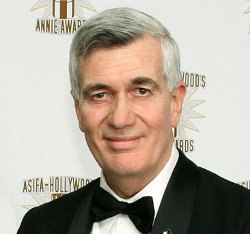
They might also do a little bit of everything. “My situation is somewhat different from others who have won in that I do not work full time as an animator or filmmaker, so the Oscar did not result in a studio job offer, nor was I seeking one,” states John Canemaker. Prior to his win in 2006 for the biographical short The Moon and the Son: An Imagined Conversation, he had already spent several decades “promoting animation around the world via teaching, speaking and screening my films.” A tenured professor at NYU’s Tisch School of the Arts since 1988 and head of the Animation Program, Canemaker has written no less than ten books and become one of the world’s foremost animation historians, lecturing at the Walt Disney Family Museum and New York’s Museum of Modern Art and regularly traveling the globe. Still, he considers the nomination and lead-up to his eventual win “a truly wonderful moment in my life”, highlighted by AWN Publisher Ron Diamond’s Oscar Showcase Tour of the major studios in the Bay Area and Los Angeles prior to the big night.

While Canemaker’s Academy Award victory saw him taking trips and making connections, Gene Deitch’s success ultimately helped him settle in one place. “I had never given a thought to remaining here,” the 88-year-old explains of his 1959 move from the US to Prague to marry his wife Zdenka. “I was getting some flak from my American colleagues for working in a Communist country, even though my reasons for doing so were in no way political.” When his short Munro made history as the first non-US production to win in the category in 1961, opinions changed. “Colleagues stopped worrying that I might be a Communist sympathizer and began asking me if they could come and work in Prague!” Contracts came in quick succession, including a job directing Tom and Jerry cartoons for MGM, allowing the animator and his wife to work continuously in Prague right up until their retirement. “All I can say is that we’ve always been satisfied and happy with our decision as we’ve never been out of work during the 52 years of drastic ups and downs [experienced by] animators in America. I have undoubtedly missed out on the big-time Feature Animation boom and I sometimes feel a twinge of regret, as I’ve always been interested in wider technological advances beyond what was possible here,” he concedes. “And yet, I have enjoyed the wide variety of short-form experimentation I managed to do.”

Producer of 2011’s Oscar-winner The Lost Thing, Sophie Byrne isn’t surprised in the least when filmmakers allow themselves to follow their passions on the heels of winning. “I think it no doubt assists in getting recognized in the global industry, in particular if that animator/director is looking to ‘step up’ into the world of feature directing. On the flip side, the animators/directors I know have actually retained a more ‘indie’ status. [Lost Thing Director] Shaun Tan and I, and notably Adam Elliot here in Australia, have been able to develop our own independent projects with the gravitas of having won an Oscar for our shorts to assist with development and further financing.”
When it comes to opening doors, the impact of receiving an Academy Award “really does not compare with anything else,” Elliot agrees, having won in 2004 for the clay animated short, Harvie Krumpet. “People put it up on such a high pedestal and somehow think that by winning one, you have some secret 'gift'. They assume you know what you're doing and can easily win another if you tried. They think your life will be forever paved with gold.”

He’s quick to caution that simply isn’t the case. Nice as it may be to earn top honors in your field, having to live up to the title of ‘Oscar Winner’ can also take a toll. “In many ways, I have felt like a fraud,” he shares. “I often feel I disappoint people when they meet me and find the pressure and expectation on every new film I make almost excruciating at times. I'm not complaining, but there are certain 'realities' that accompany an award as fantastic as the Oscar. I always say winning any film award is a cross between entering a beauty pageant and winning the lottery.” “The other point to remember,” he continues, “is that we may have won by just one vote - we'll never know. I often lament how filmmaking has become a tournament. Why should we have to compete with each other?” he asks. “I'm a bit of an idealist and prefer that films be treated more like paintings - to be observed and pondered individually.”

He isn’t the only one to notice Oscar’s tendency to create a bit of a stir. “When you show the statue,” shares Nicolas Schmerkin, who accepted the statuette for 2009’s Logorama, “people usually become strange and start acting in a surreal way.” Elliot, for instance, saw his way of life “turned upside down and back to front the moment we won. The whole of Australia went berzerk and I lost my anonymity in a split second. That was almost ten years ago and the general public here in Australia still recognizes and celebrates my achievement.”
In terms of being celebrated, co-directors William Joyce and Brandon Oldenburg most definitely got the hero treatment in the wake of their win for The Fantastic Flying Books of Mr. Morris Lessmore just last year. “Our hometown threw us the first ticker tape parade they'd had since the end of World War II,” Joyce recalls, summing the entire experience up as “an atomic fun bomb.”

Even once the dust settles, David Fine has found Oscar’s appeal to be enduring. “So many people come out of the woodwork and are proud to know an Oscar winner. That's a really nice feeling, that people get pleasure from it by association rather than it just being about the winner. When people come to the house and want to see it or hold it, it's fun that we have something that gives them a thrill,” he says. “I love to see people's faces when they get to ‘touch an Oscar!’”
Those hoping to someday see a statuette of their own adorning their mantle should heed some of the following advice, direct from the Pros. Consider structuring your project around its most unique element and explore it to its fullest potential. “We actually made Closed Mondays somewhat to show off clay animation techniques,” Vinton states. “Each of the little events that took place within the art gallery in the film was designed as a way to show off the style of Claymation.”
Byrne believes “the first and most important thing is to produce a film, or tell a story, that resonates with audiences. Technique and production value are important, but narrative strength or a great idea seem to carry the most weight.” She’s quick to add, however, “that does not mean it has to be a linear or necessarily ‘conventional’ narrative. In fact, short film seems to be one of the arenas where artists and directors have the most freedom to work outside of convention or commercial conforms.”
“Then of course, the practical side of getting your short recognized by the Academy is that you need to plan a rigorous festival schedule, highlighting all Academy Accredited ones. Ideally, you should plot your strategy around film completion and the start of the festival run and lead-up to the Oscars the following year,” Byrne notes. “If you are lucky enough to win at a couple of the Academy Accredited festivals, then you are lucky enough to be able to submit your film for ‘shortlisting’. From that point on, it’s really out of the filmmaker’s hands, in my experience.”

Should the fates smile upon you and send a nomination your way, Oldenburg suggests mentally preparing yourself for the possibility of a win. “Write a Thank You speech to get your head in the right place, but throw it away and do not try to remember it when the time comes. If you are so fortunate to get to the podium, speak from the heart then get home as fast as you can. Your family and crew are dying to give you hug or better yet throw you a parade.” And also remember Schmerkin’s words of wisdom, and “try not to do too many silly poses during the photo call.”
At the end of the day, the Academy Award, like anything else in life, is what you make of it. Perhaps a launching pad for your next great project, perhaps confirmation of your abilities as a filmmaker and testament to your contributions to the medium. Since receiving his more than fifty years ago, Gene Deitch has watched it change somewhat over time, noting that “its gold plating is almost as wrinkled as my own 88-year-old face.” If his smile is any indication, though, it’ll never lose its luster.
--
James Gartler is a Canadian writer with a serious passion for animation in all its forms. His work has appeared in the pages of Sci Fi Magazine, and at the websites EW.com and Newsarama.com.

Dan Sarto is Publisher and Editor-in-Chief of Animation World Network.