
With two stop-motion features hitting theaters this year, Gerard C. Raiti looks at another trailblazing stop-motion legend Gumby, who is celebrating his 50th year, with a talk with Clokey Prods. head Joe Clokey, the son of Gumby creator Art Clokey.

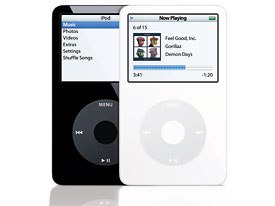
Although the term podcasting has been squatted by audio, Apples new iPod just opened Pandoras boom box to video. If you have any doubts about where the future lies, just follow those pillars of new technology early adopters the church, the pornographers and MTV (VH1, Comedy Central, Spike TV, Nickelodeon, etc.), which just snatched up IFILM Corp. (created in 1998) for $49 million. IFILM is significant because it is a distributor and aggregator much like those two other pioneer dot.com bubble survivors, Heavy.com and Icebox.com (launched as an Internet Animation Studio) of original, viewer-created and amateur content as well as teasers and trailers from Hollywood.
Like? Disney, of course, which just signed a deal with their partner Steve Jobs. Imagine, a TV show or old film for just $1.99! (Boy, is that a bad precedent except for us content providers, of course erm, I mean distributors of original content, rather read on.) IFILM also reputedly has the largest collection of video shorts on the web, something that somehow reminds me of the music video business plan that MTV pioneered.
Thats right, its always audio-visual, to start. Meaning, video is about to kill the radio star again. And you and I are sitting in the catbird seat with VC2 viewer-created content! So, whaddya waiting for? Lets get started on that animation theme channel!
Upstream, Mainstream and Downstream
Heavy.com recently announced it is launching broadbands first ever fall season of programming with seven original machinima shows (animated digital videos using video game engines) called Must Stream TV. TV is bleeding through the black box breach into broadband and vice versa, in anticipation of the target date set by the U.S. Congress for the completion of the transition to DTV: Dec. 31, 2006. Upstream (i.e., going from the net to the TV) is Al Gores Current TV, the first national network created by, for and with an 18-to-34-year-old audience, which launched in August in 20 million homes with programming pods, from 15 seconds to five minutes long.
Mainstream (i.e., TV to net) are the existing terrestrial and cab/sat channels, now all digital and using streaming media. And downstream (i.e., local TV/cable/DVD to the net) are Christian web TV stations, the pornographers, community access, local government and commercial Spanish channels, video jukeboxes like MTV, pirate radio-soon-to-video-jukeboxes, bloggers and vloggers and other rogues, more or less. And, standing on shore waiting to get our broadcaster feet wet, theres you and me.

At the moment, there are four ways to receive digital content: terrestrial broadcast antennae/set-top box or integrated digital television), cable (set top box/fibre-optic cable that carries TV, radio, phone, broadband Internet and interactive services), satellite dish) and broadband digital subscriber line or DSL (existing phone line.) While everyone seems to think the Internet is eroding on-air audience through niche programming that exists as blogs, streaming video and archived clips, TV is here to stay for a long, long thanks to digital television or, simply, DTV (i.e., digital modulation of a signals phase, frequency or amplitude, to carry information and compression to broadcast video, audio and data).
According to the FCC:
With digital television, broadcasters will have the technology available to transmit a variety of data as well as presenting television programs in new ways. This means that broadcasters will be able to offer you an entire edition of a newspaper, or sports information, or computer software, or telephone directories, or stock market updates if they choose to do so. Not only will broadcasters be able to broadcast at least one high definition TV program, they may also, if they choose to, simultaneously transmit several standard definition TV programs. Another possibility is broadcasts in multiple languages with picture and information inserts and in some cases viewers will have the opportunity to select camera angles.
Unlike the U.S., however, where DTV penetration is approaching 100% (of the estimated 120 million TV households), Europe is expected to have only 37% (85.5 million digital households) penetration in 2006 out of a total of 232 million TV households (nearly twice as many as the US!) The U.K., Scandinavia and France have been the early adopters, with existing free terrestrial broadcasters like the BBC (CBBC, Cbeebies, etc.) and Frances TF1, France Télévisions and M6 putting existing pay-TV satellite and cable powerhouses like BSkyB and Canal + behind the eight ball. Ironically, analysts agree that countries with limited cable and satellite penetration have the most to gain from DTV, leaving pay-TV scrambling (har, har) to buy into or merge with ADSL, just as they achieve breakeven after decades of investment.
TiVO, DVD, Internet, telephony, digital movies, pay-per-view, gaming, iPod, etc.: our definition of television the paradigm shift is where things are changing for we, the people, the open publisher prosumers, in a business that has historically depended on relationships. BAM! Bling! Professional, artist, activist, thinker, writer, musician, programmer, director, independent producer, hobbyist, DIY, niche get on the clue train (www.cluetrain.com). Digital also means production, marketing and delivery are practically non-issues; a niche can make a return on a modest investment in relatively inexpensive, multipurpose gear; and information resources and an audience are a click away.
Once youve rethought television, gotta rethink self, converge and pioneer. So, without any further ado, lets flesh out that business plan.
Young Turks TV©
Exposure, visibility and low-cost marketing and distribution are what the web offer. But what are you offering? You need to know who your target audience is, whether this audience will be able to support the channel, if there is anyone doing the same or a similar thing and, if so, who they are and if theyre competing for a part or all of the same market (and, if there are none, if youre a genius or an idiot), if the concept has already been tried elsewhere, whether it succeeded or failed and whether your business plan is flexible and can evolve.
There are four main sources of revenue: viewer subscriptions, advertising revenue, retail sales(merchandise and services) and sponsorship. Most subscriber channels will run free for three to six months to generate buzz before requiring a nominal fee.
Your content and technology are key.
What most people search for on the web is music, travel, sex, games and eBay. How many of these themes can you integrate into your business plan? Sources of content can be shorts, trailers, teasers, interstitials, etc. from Hollywood, independent filmmakers, amateurs, students, friends, etc.; filmed events, panels, interviews, man-on-the-street, informal discussions, market or festival happenings, webcams, studio tours, etc.; news through RSS feeds (www.bloglines.com); commercials; infomercials; live studio shoots; scanned materials; archival materials; station IDs and promotional clips. The list is only limited by your imagination. Branding is extremely important: style, look, hype, rhythm, tone, humor, music, attitude, etc.

What are your technical needs? Video/audio recording/playback, editing, capture, encoding, playout, hosting, etc. Work performed? Ad sales, subscriber management, order fulfillment, content rights management, website management, press releases, job offers, accounting, legal, etc. Staffing can you do all of it alone (with the exception of taxes and legal)? If not, how many people do you need? Full-time, part-time or freelance?
Will you be using primarily archived video-on-demand as either screen capture video (www.ScreenCamSoftware.com) or full-motion video from a webcam/camcorder as a Windows Media Video/WMV file or a Flash Video/FLV file found in most browsers (i.e., www.jokaroo.com/extremevideos), streaming (see channel guides in annexe) and/or live, on-location webcast (how to: webmonkey.wired.com/webmonkey/01/15/index3a.html) or a combination of all of the above? Webcasts dont necessarily require broadcast-quality equipment, as any Radio Shack enthusiast will tell you, and a simple podcast can be relatively inexpensive to create (see, for example: www.lionhardt.ca/wps/).
Your other options could include using community access television, in which case you would be shown locally or regionally for one hour on cable television (in, say, Burbank, California) and internationally on the net, paid for by the community; buying a transmitter (www.rf-links.com/tv_broadcast.htm#1) and getting a license from the FCC for Low Power Television Service (www.fcc.gov/cgb/consumerfacts/lptv.html) that would allow you to broadcast locally (in, say, Burbank); or renting broadcasting time from a satellite, cable or regional TV space from 2:00 to 5:00 am from a local TV station (in, say, Burbank). Video files can be transferred to the playout system using the web.
Or, simply provide the visuals for an existing audio podblogger!

And, last but not least, who is going to finance? Most startup projects fail due to lack of expertise and funding. The expertise required to do any of the above is simply and easily acquired. The maximum investment for a modest version of any of the above would be under $10,000 and, in most cases, would be a trifling fraction. The rest is content, based on your talent, a little imagination and a lot of your time. But take your time and get the business plan right. Then either do it yourself or, if the price is too steep in terms of personal time, effort, stress and expense, find some business angels.
Crass Roots
Style, fashion, technology, music (although before doing anything, please see www.riaa.com/issues/licensing/webcasting_faq.asp#whatis), videogame reviews, shopping, gossip, spirituality, finance, parenting, politics, education, training, hobbies, jobs, photos, rants anything can fill up the 24 hours. But the animation should be the cornerstone. You can start with a few hours and build. If youre broadcasting, loop them. If youre streaming, programming can be done cheaply and creatively like Bill Plymptons live drawing table for Hair High.

High concept isnt necessary, either. Do things like The Telephone Camera Show or use public domain (like Mickey Mouse, for example!) Zero investment, maximum return should be the battle cry. And dont be afraid of starting humbly. Or raising hell.
If you want some quick content, organize your own online festival where anyone can win based on viewer voting instead of the glitterati deciding. And let anyone (kids, amateurs, students, pros) send in animation, after signing the requisite online legal release form, of course. Democracy at its best. Get yourself some traditional press by organizing some publicity stunts and preparing some juicy soundbytes and youre in business. At least until you can cut out the middleman and get a direct bead on your target audience the kids in the cereal aisle.
Chris Panzner was one of the first technical directors of the Home Shopping Network, colorized movies for Ted Turner, developed theme channels for Canal Plus and has worked on hundreds of hours of animated TV shows and five features. Roughly the opposite karma of Barry Diller to be continued. He recently created production and distribution company Eye & Ear in France.