
Tom Sito takes a historical look back at the great 2D animation renaissance of the late 1980s and 1990s.

From 1988 to 2000, while CGI was still taking off its training wheels, traditional hand-drawn 2D animation experienced a renaissance of interest in a way not seen since the 1940s.
It is difficult to describe a historic period just lived. Time and distance are required to put what has occurred into perspective. The animators who were flipping paper, drawing Ariel or Stimpy, knew there was suddenly a lot of fun projects to work on, but they probably didnt think they were living in a new Golden Age. And except for a few grizzled vets, many thought it would last forever. From 1988 to 2000, while CGI was still taking off its training wheels, traditional hand-drawn 2D animation experienced a renaissance of interest in a way not seen since the 1940s. This created, in Tinseltown, a boomtown atmosphere of fast careers and fast profits. But it was a renaissance that carried within it the seeds of its own demise.
From the closing of the big movie studio shorts divisions in the 1960s to the end of the 1980s, animation was the bastard stepchild of the mainstream film business. A 1976 Report to the National Assoc. of Advertisers declared that animation, as an advertising vehicle, was, too time-consuming and labor-intensive to be profitable. The last shorts seen in movie theaters were gone by the 1970s. Mel Blanc did his last Bugs Bunny short in 1969. The major studios dabbled a little with feature cartoons but not consistently. Ralph Bakshis films and the occasional Disney feature were the exceptions.
Animation had disappeared from nighttime television except for the occasional seasonal special. Hanna-Barberas two attempts at primetime series, Wheres Huddles? and Wait Till Your Father Gets Home, didnt find an audience. No one had thought of Japanese anime since the days of Astroboy and 8 Man. Only the vigorous efforts of Motion Picture Academy Board of Governors like June Foray and Herb Klynn prevented the animation category from being dropped from the Oscars.
Nope, in America, animation was good only as a babysitter on Saturday mornings. Young animators inspired by Tex Avery and the Nine Old Men, who burned to do quality animation, were told to forget it. Animation like Bambi and the Looney Tunes were done with Depression Era budgets, youll never see anything like that ever again.
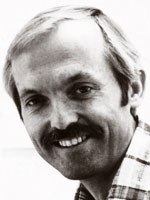
The 2D Renaissance might have begun when Don Bluth quit Disney in 1979, or with the birth of MTV, among other new networks. Courtesy of Don Bluth's Toon Talk.
There are several places one may point to as the beginning of the 2D Renaissance. Don Bluth and his young crew quitting Disney in 1979 could be seen as the first spark. Or the founding of the Fox Network or MTV, with a mandate to create programming free of the kind of censorship that kept Lucy and Ricky in separate beds. Maybe it also had to do with the baby boomer generation becoming middle age consumers, nostalgic for the cartoon entertainment of their youth. The breakup of the post-war Communist states enabled a new generation of eastern European artists to move into the mainstream film community with their new ideas. And the creation of new cable networks like Nickelodeon and Cartoon Network created new opportunities for animation.
By the 1980s, The Walt Disney Studio still held a precious niche in the publics mind. Its cartoons were special events, but there were long periods between films and little or no TV programs. While the wild ideas of Ralph Bakshis Heavy Traffic, Dunnings Yellow Submarine and the blockbuster changes brought about by Star Wars changed Hollywood film, the Walt Disney Co. acted like the Kingdom of the Sleeping Beauty. The creator had been dead for 18 years, yet Disney workers still addressed production problems with, What would Walt do? Into the 1980s, most Disney animators still used hand-cranked pencil sharpeners. In the rest of town every animator had a cassette player to listen to soundtrack tapes, animators at Disney still relied on acetates thick, record-like 78mm platters that played on a record player, much as they had done when their ancestors were animating The Three Little Pigs in 1933.
The studio reluctantly started a training program for new animators in the early 1970s, only when it became obvious that their old crew were not immortal. In 1984, among movie studios, Walt Disney Studios was sixth in overall box office and relied upon theme park revenues to keep its books balanced.
After a celebrated power struggle, Roy O. Disneys son, Roy E. Disney, the producer of True-Life Adventures, wrested control of the company from Walts son-in-law, Ron Miller. Roy had developed a healthy stock portfolio under his banner company, Shamrock Inc., headquartered on the site of the old UPA studios. Roy and his colleague, Frank Wells, brought over to Disney high-powered studio executives Michael Eisner and Jeffrey Katzenberg from Paramount, where the two had been instrumental in helping Barry Diller turn around the fortunes of that sagging behemoth. Now Eisner and Katzenberg were given full powers to improve the fortunes of the Magic Kingdom.

Roy Disney (left) would not let Disney animation die. He took Michael Eisner (center), Frank Wells and Jeffrey Katzenberg (right) to the animation department where they were won over.
They immediately set to work bringing in new ideas, new people and new talent from the rest of Hollywood. George Lucas, Steven Spielberg and Martin Scorcese came in to update theme rides at Disneyland (Star Tours, Captain Eo). When the Eisner-Wells-Katzenberg team looked at the animation unit, their first instinct was to get rid of it. Even with their new trainee program, it still looked like a handful of white-haired old men who turned out a movie every five years. By now most of the Golden Age artists were gone and its best days seemed behind them. They could shut down the animation unit and license the characters to be done overseas for quick cheapies.
This was where Roy Disney put his foot down. Animation was the heart and soul of the Disney Co. and he would not let it die. On Sept. 23, 1984, Eisner, Wells and Katzenberg were taken by Roy Disney to meet the Disney animation department. They were pitched the storyboards of Basil of Baker Street, later renamed The Great Mouse Detective. They were won over by the potential of quality animation. That same day, Eisner dictated the first memos ordering the set up of a TV animation division. They bought Hanna-Barberas Australian subcontracting studio and created an alliance with Tokyo Mushi Shinsha. They began work on Tailspin and Gummy Bears. At first the L.A. animation community smiled at Eisners determination that elitist Disney should deign to compete with Hanna-Barbera, but then TV was where the serious money was.
Bluths independent attempt at his own Snow White, called The Secret of NIMH (1982), didnt make big box office, but it did signal that here was one studio in town that could seriously do Disney-caliber animation outside the walls of the Disney studio. This attracted the eye of Spielberg. Using Bluths animation team in Ireland, Spielberg produced animation hits: An American Tale (1986) and The Land Before Time (1988), giving Disney its first serious challenge since the Fleischer days. Spielberg also produced the Warner Bros. hit TV series Tinytoons Adventures (1990) and Animaniacs (1993) and the Amazing Stories episode, The Family Dog (1993). The last of these was directed by young Disney artist Brad Bird. Obviously the key was good story, memorable characters and good music.

The first salvo of this new Disney era was Who Framed Roger Rabbit, which boasted the involvement of big guns Steven Spielberg and Robert Zemeckis. © Buena Vista Home Ent. Inc. All rights reserved.
The first big salvo of this new Disney era was 1988s Who Framed Roger Rabbit. Writer Gary Wolf had written the novel Who Censored Roger Rabbit in 1976. It was about a Raymond Chandler type hardboiled detective who solved the murder of a cartoon character. Disney studio bought the rights to the book in 1978 but another Disney animator at the time said to me, You know well probably never make it. Heck, we owned the Lord of the Rings throughout the 1960s and nobody did anything with it! Roger Rabbit did sit in a vault until 1984. Spielberg produced the film and brought in his friend Robert Zemeckis (Romancing the Stone, Back to the Future) to direct.
Initially, Roy Disney wanted the animation done by the Disney unit, but Spielberg wanted it done on the Paramount lot, and Industrial Light & Magic said they could do it in Marin County. Finally the compromise was to create the animation in England with Academy Award-winning director Richard Williams and an international crew. An additional crew under veteran Disney animation team Dale and Jane Baer was set up in L.A. to help with the overload of work.
Despite setbacks and the final mad rush to completion, Katzenberg stood by Spielberg who stood by Zemeckis, so the project remained relatively unmolested by upper management. An 11th-hour crisis occurred when Disney suddenly demanded that the film be distributed as a Walt Disney Pictures release. Zemeckis was against it. Remember that, at this time, the Disney brand on a live-action film had sunk to low public esteem thanks to films like Condor Man (1982) and The Black Hole (1983). Eisner and Katzenberg wanted to use this film to restore the Disney brand name, but Zemeckis thought it would hurt his movies chances. A compromise was to call it a Touchstone release, Touchstone being then the hipper PG wing of Disney distribution that had released films like Splash (1984). Who Framed Roger Rabbit was a huge critical and financial success.
It earned four Academy Awards and was the biggest box-office earner of 1988. It proved to a skeptical Hollywood that a high-quality, high-budget cartoon could make the kind of monster profits made by an Arnold Schwarzenegger or Tom Cruise movie, and without their fees.
The Disney animation crew wondered if Roger was just an aberration in the normal pattern of animation releases. The next release, Oliver & Company (1988), earned a more understandable profit: $46 million. The next film in the Disney studio schedule was The Little Mermaid, directed by John Musker and Ron Clements. There is a legend that somewhere in the bowels of the studio there was a yellow, crumbling memo from Walt Disney about which fairy tales would and would not make good cartoon features. Supposedly topping the list of Dont-Do ideas was The Little Mermaid, followed by Beauty and the Beast. But, hey, who has time for history? To make Mermaid, Katzenberg forged an alliance with the Broadway musical team of Howard Ashman and Alan Menken.

Katzenberg went against the legend and chose The Little Mermaid as the next big feature release. He forged an alliance with the Broadway musical team of Howard Ashman (left) and Alan Menken.
While the crew finished drawing the film, Katzenberg grandly announced that it was going to be the first animated feature to make $100 million at the box office. We all thought he was crazy. Animated films didnt earn that kind of money; they only made $20 to $40 million, tops. In 1989, The Little Mermaid made $110.7 million, $222 million overseas, sparked billions in toy sales and earned two Oscars. Four years after the movie came out Little Mermaid merchandise was still selling as if it was new. No one had seen anything like it.
The animated feature was called the lifeboat of the American Broadway musical, which had also been in the dumps the last few years. Katzenberg felt musicals would be the next wave in the 1990s. The Disney artists made lots of jokes about Katzenberg buying the animation rights to Paint Your Wagon and Ross Hunters Lost Horizon. There was a rumor that he was trying to secure the rights for My Fair Lady to make something called My Fair Kitty.
After purging all the production people from the Ron Miller era, Katzenberg replenished the ranks with personnel from the Broadway stage. Animators joked that back on Times Square dancers and musicians must be milling about, wondering why no one had posted the next rehearsal schedule. Why? Because all their production managers had left for Hollywood to go torture animators. The influx of new executives had good and bad effects. There were some who embraced this funny art form and its unique community; others preferred to just ride this gold rush until it ran dry, then go on to something more serious.
In the 1990s, the Disney team created some of the most memorable animated films since the Golden Age: The Little Mermaid (1989), Beauty and the Beast (1991), Aladdin (1992) and The Lion King (1994). The Lion King alone generated more than $2 billion worldwide and for a while stood alone with Jurassic Park as the most profitable movie of all time. Far from being merely kid fare, these films became date movies. One could go to a local theater on a weekday late show and see a sell-out crowd, without a child in sight. In 1991, Beauty and the Beast became the first animated movie ever to earn an Oscar nomination for Best Film. Insiders said it was it lost narrowly that year to Silence of the Lambs.


A change had also occurred among the Disney artists. In the 1970s artists seemed to have a preoccupation with recreating the glory of the past. It was as though the best work ever done in animation was already done before they were born. Ironically it was old Frank and Ollie who would want to discuss new animated films they saw. Even they noticed it was unhealthy to dwell on the past all the time. Now all the emphasis was on the future and the next film. Instead of, What would Walt do? the phrase heard was, Are we breaking new ground?
At the same time big things were happening in Disneys television animation division. Starting with Aladdin II: The Return of Jaffar (1994) and A Goofy Movie (1995), Disney TV Animation produced a series of highly profitable made-for-video movies. The writing and preproduction were done in Los Angeles and the bulk of production completed cheaply overseas. Disneys success started the other Hollywood studios salivating. In 1972, 55% of the total revenue of the Walt Disney Co. was from theme parks, but, in 1994, 55% of the total revenue of the company was from animation.
Not just Bluth was working to catch Disneys lead in feature animation. Scenting success, Paramount, Warner Bros., Fox and Universal revived their long-dead animation units, Ralph Bakshi, Hanna-Barbera and others weighed in with new feature cartoons: Rover Dangerfield (1991), Ferngully: The Last Rainforest (1992), Bebes Kids (1992), Cool World (1992), Once Upon a Forest (1993) and The Swan Princess (1994). Warner Bros. feature animation, under former Disney executive Max Howard, built a facility in Glendale with a research library and a humidity-sealed archives. Maverick movie mogul Ted Turner bought Hanna-Barbera and tried his own version of playing Walt Disney: The Pagemaster (1994) and Cats Dont Dance (1997).
All this competition made it fat city for experienced 2D animators. Dingy warehouse industrial spaces with corkboard walls were replaced by offices with matching furniture and a scenic view. Salaries tripled and signing bonuses paid out as studios vied for the same artists. Year-round employment replaced the television season. The money was nothing like a movie star earns, but it was tops for the animation world. Studios wanted to lock talent into a repertory company system going from picture to picture.
The studio publicity departments, working on the model of Frank and Ollie and the Nine Old Men, turned out stories of the new star animators: Glen Keane, Eric Goldberg, Andreas Deja, Will Finn, Kathy Zeilinski, Duncan Marjoribanks, Bruce Smith and many more. Animators got agents and negotiated personal service contracts. The Wall Street Journal and Newsweek did features on the life of a Hollywood animator. Animators appeared on Premiere Magazines list of The 100 Most Powerful People in Hollywood.
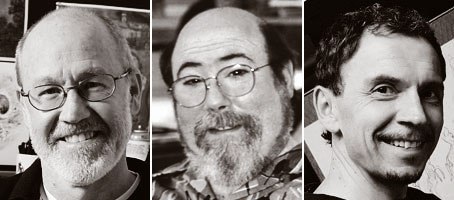
replace_caption_sito07_GKeane_EGoldberg_ADe.jpg
What was great for the local animation community was that more studios were getting into animation and, possibly more important, results showed that any attempt to do a big feature on the cheap overseas had met with failure. Only high-quality union work in Los Angeles made the monster profits.
Los Angeles began to see a reverse of runaway production. The finest animation talent in the world was being brought to Los Angeles to augment the crews there. I recall that in 1977, my New York accent was the most exotic sound anyone in a studio had ever heard. In 1990, Hollywood studios were a United Nations of artists French, Irish, Dutch, Vietnamese, Korean and Bulgarian. Two Croatian animators were literally plucked from frontline trenches in the Yugoslav Civil War and flown straight to Disneyworld.
In 1979, the membership of the Animation Guild Local 839 had peaked at 1,985 active members. After strikes and recession, those numbers plummeted to 715 by 1987. By 1994, the membership was at an all-time high of 3,000 members. The animators society, ASIFA Hollywood, which, by 1985, had dwindled to 115 fans and some Jay Ward veterans, was now up to 3,000 members. When flop films would discourage studios from getting into another animated film, the latest hit would send them back to the table for another try. The sky was the limit, and it seemed like the good times would go on forever.
Check back in March to read the second half of The Late, Great, 2D Animation Renaissance.
Tom Sito is an animator, teacher and co-founder of Gang of Seven Animation in Los Angeles. His new book Drawing the Line: The Untold Story of Animation Labor is due out this fall from University of Kentucky Press.