
With console platforms evolving, Karen Raugust looks into how gaming companies are increasingly looking to film, Web design, broadcasting and elsewhere to round out their development teams.

Developing games for the next generation of videogame consoles Microsofts Xbox 360, Sonys PlayStation 3 and Nintendos Revolution requires new skills, new tools and new processes. As a result, many gaming companies are turning to the film industry, as well as television, web design, online gaming, architectural animation and the commercial sector, as they seek additional artists to enhance their teams.

The crossover from film and other industries into videogames has been ongoing for years, of course, but is expected to intensify with the advent of next-gen HD consoles, which boast film-quality resolution. We are entering a new era where videogames are not a poor relation, says Jamie MacDonald, vp development at Sony Computer Ent. Europe, the London studio best known for The Getaway and EyeToy.
Glen Entis, svp and chief visual and technical officer at EA Worldwide Studios, agrees, noting that films no longer wow audiences with spectacular new effects in every production; the main challenge now is to find a way to maximize the number of shots while minimizing the cost. The level of excitement [in film] has calmed down, Entis says. Vfx have been almost commoditized.
On the other hand, next-gen videogames present interesting challenges. The challenges are basically invitations to growth, Entis believes. Creatively, we can almost not imagine where the effects are going. EA has been hiring from the film industry for years, and it continues to seek film artists who are looking for that excitement.

Sony Europe is actively recruiting from the TV and movie post-production houses that surround it in At the same time, many of the skills required to develop next-gen games are more in the CG movie space than in the game space, MacDonald explains. Those skills havent been needed in the game industry up until now.
Londons Soho district. Its an education process, really, says MacDonald. If I threw a stone from where Im sitting 100 yards in any direction, Id hit an edit suite or post-production house. But if you told them a large videogame development studio was 100 yards away, they wouldnt know. MacDonalds goal is to encourage freelance artists to add videogames to their menu of TV and movie projects.
Epic Games is looking to films to recruit people in two specific areas where it believes schools havent prepared students adequately. Unlike modeling, where training has followed the leaps in technology, there has been a lack of education in textures and shaders, as well as in particle effects, says Epics art director, Jerry OFlaherty. We have a lot of explosions and muzzle flashes. Its shocking how few people want to or are trained to do this. Old-style particle effects and shaders wont look up to snuff in the hyper-real environment of next-gen games, OFlaherty adds. But he believes film people, who have been creating complex shaders in a hyper-real environment and blending effects with live action, will fit in easily.

Artists Wanted
Film is not the only area where artists skills translate well to next-gen gaming. Games have increasingly looked further afield over the last few years to experts in the various related visual industries, like film and TV, for talent, says Frank Kitson, CG supervisor at Electronic Arts U.K. I dont see that trend changing, as its virtually impossible to expand, both technically and visually, in a vacuum.
I think were at an interesting crossroads where all artists can participate if they have the talent, says OFlaherty. With the next-gen consoles, artists are no longer muzzled by technology, he adds. For art directors, you have so few limitations that your vision really comes through.
Vfx artists from the commercial world and episodic television have similar skill sets to those needed for game development. In particular, game studios value their experience in creating spectacular and realistic effects under tight time and budgetary constraints. And architecture, always an important discipline, becomes critical as resolution improves. We want the worlds to feel real and lived in, says Matt Omernick, art director at LucasArts and the author of Creating the Art of the Game. His company typically has three or four people with architectural backgrounds assigned to a given project.
Game makers are trying to broaden their audiences, in part by making sure they create intuitive and accessible user interfaces. Web designers have a unique skill set thats become increasingly desirable, says Omernick. He points out that interface designer is now considered a full-time position that begins prior to preproduction; in the past, the designer was sometimes brought in just a few months before a project was finished.
Improved Resolution
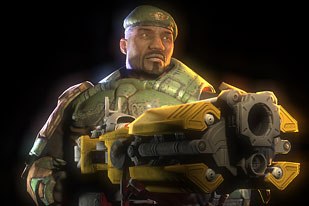
One of the notable attributes of next-gen games is their visual clarity. We see the graphical fidelity and sophistication of animation almost as a given on the PlayStation 3, explains MacDonald. It has to be absolutely up there with the best CGI movies.
Not only are screen shots stunning, but also movement and gameplay are a step ahead of previous versions. The increase in resolution and clarity of the images isnt tiny, insists OFlaherty. Whereas current-gen projects could get away with looking gamey, the hyper-real visuals in the new generation means every other part of the visual experience has to crank it up.
Its a much more expressive medium now, adds Chris Satchell, general manager of Microsofts Game Developer Group. Youll really be able to see the defects in the HD era. You cant almost hold a door handle or almost lean on a wall. There can be no floppy hands. It puts a lot of pressure on the animators. On the one hand, you can get away with less cheats than in the past. But on the other hand, theres an opportunity because of that.

The experience is changing for our audience on this next generation, Entis says. But he cautions that the new technology requires new ways of thinking about a game. Doing exactly what we were doing, but 10 times more, thats not the direction we want to go.
Next-gen platforms require artists to model characters in low-poly versions, then use ZBrush or Maya to create an unlimited-poly model from which normal maps are generated and translated back down to low-poly models. Texturing in next-gen games is more akin to prerendered film work than in the past, OFlaherty explains. It was a more 2D painterly thing, he says, but now the normal-map texture gives lighting and shading clues. This process relies on artists who really understand textures, such how specular colors differ or how shine emanates from bricks vs. cotton, he adds. Theres a refined sensibility required that we didnt have before.
Vfx artists from film, who are used to working with a high level of detail, can flourish in this environment. The way they build models is really valuable, says Mohammed Davoudian, president & ceo of Brain Zoo Studios.

Artificial Intelligence and Physical Simulation
In addition to their higher resolution, next-gen games also give large groups of characters, as well as objects, intelligence. Objects have behaviors or personalities built into them, offers Entis. The content starts to become intelligent content. You start thinking about this and you realize what an artificial world weve been living in.
The new reality is a blend of graphics and animation and physical simulation, where not only static visuals but everything else must look good and have physical control and integration. Satchell points out that rather than approximating reality, as in the current generation, everything in next-gen games is simulated for a realistic interaction. And instead of five people in a street scene, there may be 300, all of whom must be naturalistic.
Now things are changing, says Kitson. In my opinion, animators will need to have a deeper understanding of technologies that provide rag-doll and other physically enhanced movement systems. In some cases, there will be a requirement to have a deeper working knowledge of AI and its influence on movement in a game. They will play a deeper, more integral role in the experience.
The changes in next-gen games, compared to current versions, are in some ways evolutionary and in others revolutionary. Theyre evolutionary, as commonly used modeling tools are expanded to accommodate the ever-increasing number of polygons that can be thrown around in realtime on next-gen consoles, adds Kitson. Similarly, traditional tools such as PhotoShop are evolving as they are being used to create normal maps, HDRI images and other mapping techniques not available to current-gen platforms. On the other hand, Kitson describes refinements in lighting and rendering as a big step forward. Using combinations of traditional in-game techniques along with things like image-based lighting, we are approximating things like global illumination realtime, which for games is quite revolutionary.

Process and Work Flow
With their greater detail, increasingly complex environments, more intelligent characters and objects, and growing level of seamless integration, next-gen games require an exponentially larger amount of data and art than the current generation. Six years ago, a development team might have weighed the option of hiring a third programmer or fourth artist, Satchell points out, while today it might be deciding whether to add 20 more people to a staff of 30 programmers and 110 artists already on board.
Because theres so much art, cost will be a huge factor, stresses Davoudian. He and others believe the sheer amount of data required will lead to an increase in overseas outsourcing. While creative duties and the assembling of components will continue to be done in-house, asset-building will be more frequently completed abroad.
Next-gen platforms also are changing team members roles, often compartmentalizing them. While one artist working on a current-generation game might create a characters skeleton structure, then rig the mesh, then do the animation, several artists might be involved in the same process in a next-gen game, with one person doing the rigging, one the meshes and one a particular type of animation. Similarly, the tasks of modeling, text mapping and lighting, which might have been completed by a single person in a current-generation game, might now be done by several people, with one responsible for a specific type of texture, for example.
Satchell points out that there is now a technical infrastructure, where one person creates the technical guidelines for a certain texture such as how leather will look and the parameters within which it can change which the artist then follows.
An important challenge, then, is how to integrate all these separate tasks. Digital collaboration becomes a key facet of next-generation development, Satchell says, noting that Microsofts next-gen software development platform, XNA, is focused on providing an integrated, artist-friendly environment that enhances productivity and streamlines the production pipeline.

One of the biggest challenges for videogame artists has always been working within the limitations of the hardware. Thats not going to change, warns Omernick. Thats one of the misconceptions about the next-generation consoles. He points out that while the next generation has probably 60 times the power of the current generation, we dont have 60 times the budget, 60 times the schedule or 60 times the people.
The real paradigm shift, Omernick says, will come from figuring out how to make a better game fulfilling consumers expectations for a grander environment with more characters more efficiently, and still within the same two-year development cycle. We dont have 60 times the resources, so we have to completely think differently about how a game can be done, he says. That will require additional tools, as well as more reliance on procedurals. Were looking for things the computer can do for us.

Training Issues
The evolution in next-gen console games will require training, of course, both for those with long experience within the videogame industry and for those coming over from film or other sectors.
For videogame artists, much of the focus will be on using the new tools being developed for gaming, as well as tools established in the film industry but now gaining favor within the game business. Many game companies have been standardized on Maya, Max or XSI, but are now adding tools such as endorphin or ZBrush to their pipelines. ZBrush has changed how everyone does organic modeling, but its different from any tool these guys have used, says OFlaherty.
Gone are the days where an artist can spend years working only in one central package, Kitson reports. We use multiple art software packages and many varieties of specialist in-house custom-built programs. Each individual needs to become comfortable with the concept of constant growth and the quest for better, faster and more reliable technology.
Satchell notes that videogame artists not only need to learn to use new tools and technologies, such as parallax mapping, which are now standard, but they also must learn how to use them efficiently and cost-effectively. You can do a lot of things now, but you have to be trained on when to use ZBrush for normal mapping or endorphin to speed up animation creation, he says. You can do all these things, but at what cost? Theres the issue of the sheer volume and cost of animation against the game budget.
Artists with a film background, who have experience with high-res modeling and many of the software packages that are gaining traction in gaming, will be able to help with this transition. We see them as mentors, almost, says MacDonald. Theyll help us raise the standard.

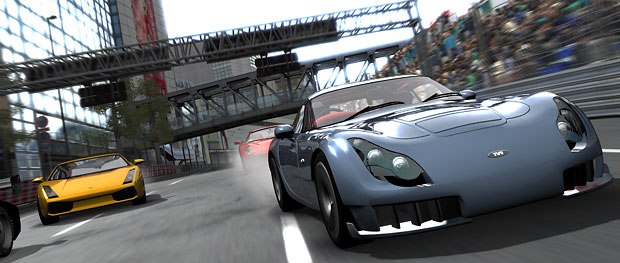
On the other hand, those coming over from the film industry will need training as well, particularly in how to work within the memory constraints associated with gaming. Omernick cites an example of an artist with experience in film or broadcast being given an 8,000-polygon limit for a character. They get one hand done and their polygon budget is already blown, he says. Its mainly about understanding the limitations were working with.
Tight schedules are another issue. Film modeling and lighting are completed more slowly than the same tasks in gaming, where the process is sped up at least by half, according to Davoudian. That requires a new mindset for film artists moving into gaming.
And, of course, interactivity remains unique to games. Understanding interactivity is the biggest challenge, says Entis, who adds, Some [film people] struggle with it, but for some its like a big shot of caffeine.
I think it will slowly become easier for individuals from film and TV to transition to games, adds Kitson. We are gradually structuring our tools to work in the same way they do in their industries. For example, our lighting and color space control techniques are virtually the same as you would find in any broadcast editing suite. Our character rigging setups are comparable to those found in advanced film applications, and in some cases even superior in that many of them have realtime cloth and physics components.
Many experts believe that artists who, whether having a history in films, gaming or another artistic field, are trained in multiple facets of production texturing, modeling, lighting and rigging, for example will become increasingly valuable to the development team. Generalists will become more of an asset, Davoudian believes. And the best person for the job may be the one who has both gaming and film experience. As Davoudian says, The next generation will be a cross between the film and the games businesses.
Karen Raugust is a Minneapolis-based freelance business writer specializing in animation, publishing, licensing and art. She is the author of The Licensing Business Handbook (EPM Communications).