
As the U.S. Copyright Term Extension Act approaches the Supreme Court, Dr. Toon discusses how it will impact toondom. Is corporate America protecting itself or robbing the public?
"Forever Yours" may be a declaration of love, but "Forever Mine" has become a declaration of war, one that will soon be fought behind the doors of the U.S. Supreme Court. The reason for this battle? To determine whether Congress has the authority to perpetuate copyrights ad infinitum. At stake? Literally thousands of artistic works that are being denied widespread public access by the media corporations that presently own them. This battle was ignited by a former Unix system administrator named Eric Eldred who, in 1995, began putting literary works that had fallen into public domain on the Internet. Making Mr. Eldred's vocation interminably difficult were America's copyright laws.

How Did We Get Here?
These laws, first addressed by the United States Copyright Act of 1790, provided for a term of fourteen years renewable in the final year for another fourteen. In actual practice Congress tended to add extensions as time rolled on. Since 1960, in fact, Congress has seen fit to extend copyrights on artistic works eleven times. Without going through the entire history of this issue, suffice it to say that copyrights eventually came to enjoy 75 full years of protection. This situation might have been well and good, but yet another extension was passed in 1998. The Sonny Bono Copyright Term Extension Act tacked another twenty years of life on to existing copyrights, becoming in the process a cause celebre for legal scholars, entertainment corporations, archivists, historians, and last but not least humble entrepreneurs such as Eric Eldred. This document covers a wide spectrum of intellectual property, but it has become most widely known as the "Mickey Mouse Extension Act."
Why? The world's most famous mouse was due to become public property in 2003, and Mickey (along with thirty-five of his early cartoons) would have passed from Disney to The People. Donald, Pluto and Goofy were soon to follow suit. Not surprisingly, their parent studio was more than a bit reticent to let them pass without a fight -- especially since these characters are the icons of an empire that reaps between $8 - $10 billion per year. According to Boston Globe Magazine (8/29/99), Disney lobbied extensively to have Mr. Bono's bill passed. Ten of the thirteen original House bill's sponsors received contributions from Disney (or its employees) during that election cycle; so did eight of the twelve Senate sponsors. Disney CEO Michael Eisner personally lobbied Senate Majority Leader Trent Lott (R., Mississippi). Lest Disney seem like the only corporate entity dispensing campaign largesse to the lawmakers, it should be noted that solons such as Patrick Leahy (D., Vermont) received contributions from both Disney and Time Warner (custodians of a few famous toons in their own right). While the nation's attention was riveted on President Clinton's impeachment proceedings, the bill quietly slipped through into law.
So, business as usual, right? Not according to Lawrence Lessig, a Stanford law professor who took up Eldred's cause. Lessig believes the Extension Act to be unconstitutional for the following reasons: The Act violates the First Amendment as it fails to protect freedom of expression; Congress is exceeding its authority to extend copyright protection; and the bill represents a corruption of the original intent behind copyright law. Enter the Honorable Justices of the Supreme Court, who will decide whether or not Congress has acted in a Constitutional manner. Those who maintain (in an even louder voice since Enron) that the U.S. government has become a "corporatocracy" under the control of wealthy special interests are already predicting defeat. Those who retain their idealism hope for a victory on behalf of the people, who would finally gain access to artistic works previously denied them.
I am by no means an expert in legal affairs. It's all I can do to catch the latest episodes of Justice League, let alone follow Supreme justices; all the legal and economic repercussions of this convoluted case are beyond my province to discuss here. My main concern is, what does this brief mean to We the Animation Fans?

The Downside
To begin with, the past would be effectively frozen should the Bono Act be upheld. Arizona State University law professor Dennis S. Karjala commented that: "For the first time in our history, no new works will enter the public domain for a full twenty years." Fellow AWN columnist Jerry Beck also notes: "Hundreds of cartoons, particularly black-and-white cartoons (think Scrappy, Oswald, Bimbo and others), are currently held prisoner by the big corporations that own them." These cartoons are likely not worth the effort on the part of these companies to restore and release because they are not profitable enough. They certainly won't be released to theaters as before; they can't compete with the hip, digital products available on TV; and they are not likely to cause stampedes at the local video store. Therefore, said cartoons sit and deteriorate into piles of nitrate ash to the chagrin of Jerry, Jere Guldin, and other animation historians and preservationists.
The unfortunate point is, there is still a profit to made on these films. Entrepreneurs of works that fall into the public domain can package and sell these films to the public. These toons may not end up enshrined on flashy DVDs; in fact, if the history of public domain cartoons is any indication, they are more likely to be going for $4.99 per tape at Big Billy's Toy Warehouse. This does not in any way diminish their intrinsic value; should the Supreme Court grant a second, publicly-owned life to Scrappy, Yippie, Oopie and Co., they will once again be seen and thus rejoin our cultural heritage. I can't say whether releasing the surviving manifest of Farmer Al Falfa, Krazy Kat or Dinky Doodle cartoons to public domain would make America a better place or give its citizens a deeper appreciation of art, but doing so would be closer to the original intent of the Constitution and its Framers.
The Debate
The Framers, however, were not exactly detail-oriented when composing the original laws. Article 1, Section 8 of the Constitution states that exclusive rights expire after "limited times." Although the document clearly doesn't say "in perpetuity," one could argue that (relative to the time elapsed since the Whigs last ran a candidate) ninety-five years isn't really all that long. Thus, a legal conundrum: "limited times" may not be infinite, but the ink on the Constitution never quite dries, either. Another problem is that the Framers did not foresee the rise of multibillion-dollar business conglomerates and the influence that their lobbying could wield on future lawmakers. Professor Karjala summed up the issue rather succinctly for the Los Angeles Times on February 21, 2002: "It (the case) is one where we simply can never expect Congress to follow the Constitutional requirements because there is a built-in bias in the legislative process for copyright. The beneficiaries are organized and the general public is not. It's no one's fault. It's structural. It's a problem of democracy."
It is the nature of that Constitutional democracy to solve problems through amendment, negotiation and compromise, and in that spirit some interesting ideas have been proposed. Eldred's lawyer Lawrence Lessig, in an interview with The New Yorker (January 21, 2002), suggested that "copyrights should last five years but should be renewable fifteen times, except for copyrights on software, which should be renewable once." Jerry Beck opined that, "If it were up to me, I'd compromise with the studios when their film copyrights expire. For example, give the studios a choice: make your black-and-white cartoons...available on video and profit from it or forfeit your holdings to the public domain." Both suggestions are worthy of King Solomon, but the fact remains that unless the original intent of the Constitution is upheld and enforced by the highest court in the land, these solutions are subject to end-runs by influence peddlers. Disney and AOL Time Warner are no doubt priming the pump for 2019 even as I write this column, and this is precisely what Dr. Karjala fears.
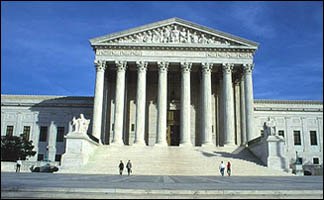
The debate will be a bitter one. Steven Gillers, vice dean of New York University, told the Los Angeles Times (2/21/2002) that: "This case is sexy because it's about money and the arts at the same time. Probably billions of dollars ride on this decision, so millions will be spent on lawyers and amicus briefs and research on the history of copyright going back to King James." In the same article, Los Angeles lawyer Neville Johnson was more specific: "It's Mickey Mouse, is why they're all freaked out." Disney marketing expert Kevin Lane Keller concurred: "In the case of Mickey Mouse this is a huge issue. Mickey still has huge symbolic value and he still has a lot of commercial value." It should be pointed out at this time that even if early depictions of Mickey Mouse fall into public domain, the character still enjoys formidable protection as a Disney trademark. Those who try to develop new cartoons, stories or venues for the Mouse will undoubtedly be hit with the legal equivalent of the daisycutter bomb by Disney's crack team of lawyers.
Is This What Was Meant?
It seems that the copyright laws, as presently construed, represent the victory of corporate interests over the people. I am not anti-Disney; free-market capitalism is the economic theory that underpins our culture, and few companies have done a better job under its tenets. I am also not anti-government; for the most part, Congress does a passing fair job of negotiating between two increasingly contentious parties in the greater interest of the country. What I most vehemently decry is the fact that major corporations can, in their own best interests, overstep the bounds of economic competition by influencing the political process with self-serving contributions. Dr. Karjala is only partly correct; the current copyright flap is less a problem of democracy than a tortured distortion of that ideal. Attorney Gerry Margolis, who represents some of the mightiest copyright holders, also spoke with the Los Angeles Times on the subject of public domain entrepreneurs: "We're not talking about people who want to make intellectual property available to the free world, we're talking about people who want to go into business...and make a profit on what yesterday was someone else's property." That may be, but isn't that what the Constitution intended in the first place?
If the nation is indeed on its way to becoming a "corporatocracy," then we don't need a Constitution; well-defined business regulations and a Standard Operating Policy will do fine. If, however, the Constitution is indeed the founding protocol of all our existing laws, it is time for the Supreme Court to acknowledge it as such. This august body must issue a call for legislators to draw up a binding and definitive copyright law, one that ensures the release of intellectual property into the public domain after a just and reasonable amount of time. That law should then be given permanence. As for Mickey Mouse, that supreme synecdoche of the copyright controversy, even he must bow to the law. Walt Disney passed away nearly forty years ago. Virtually everyone who originally worked on Mickey has followed Walt to the grave, and the few who have not are close to joining the choir invisible. They have profited from the Mouse, as have their heirs, and it is now time for their creation to be turned over to the people, just as the Constitution allows.
Should a few daycare centers now paint off-model Mickeys, Donalds and Goofys on their walls, or some six-year old don a Plane Crazy T-shirt that did not come from a Disney Store, it is doubtful that Eisner's empire will crack into a billion pieces. Those most aggrieved will likely be our elected representatives, particularly those who are already most threatened by campaign finance reform. I believe that the public will serve as competent custodians of any animated films and characters released by law into their care. Copy? Right!
Martin "Dr. Toon" Goodman is a longtime student and fan of animation. He lives in Anderson, Indiana.